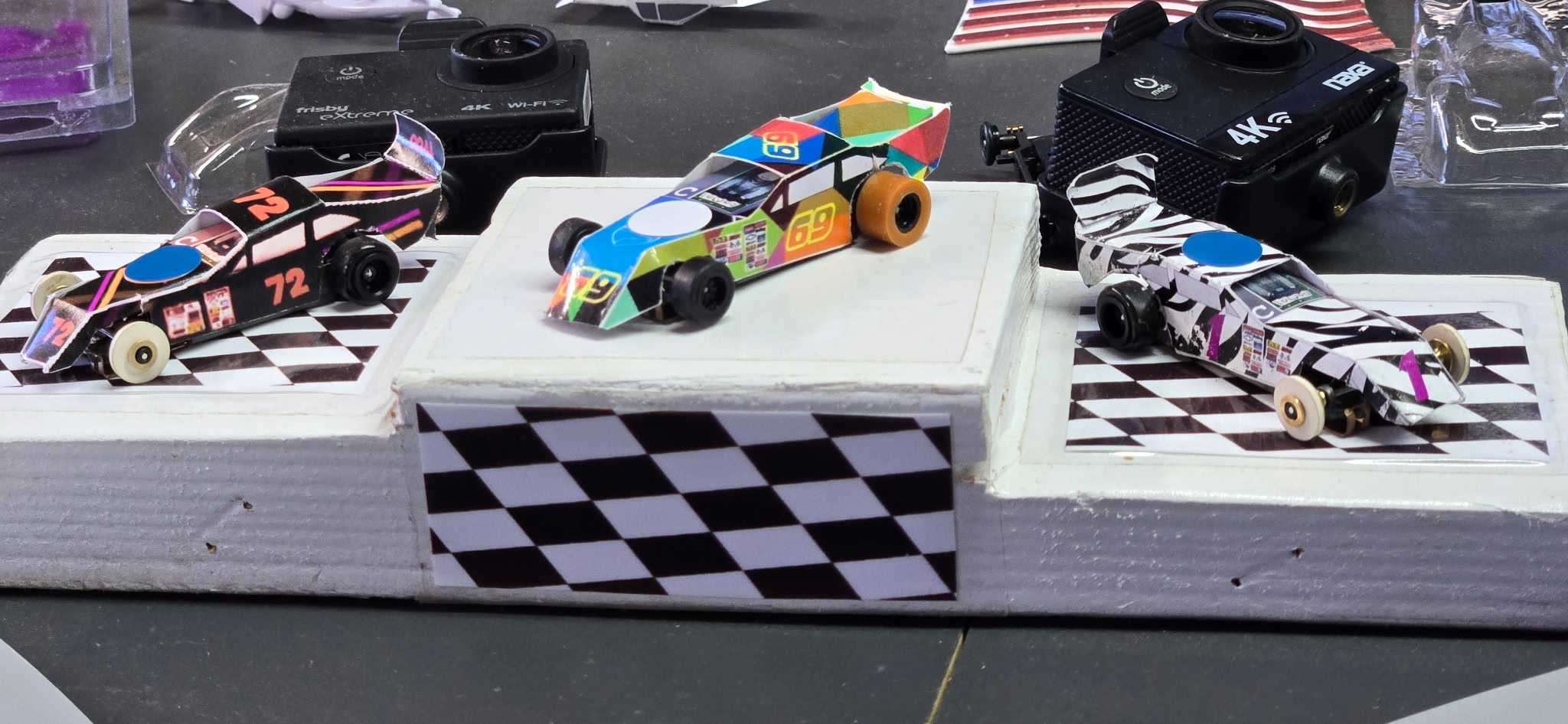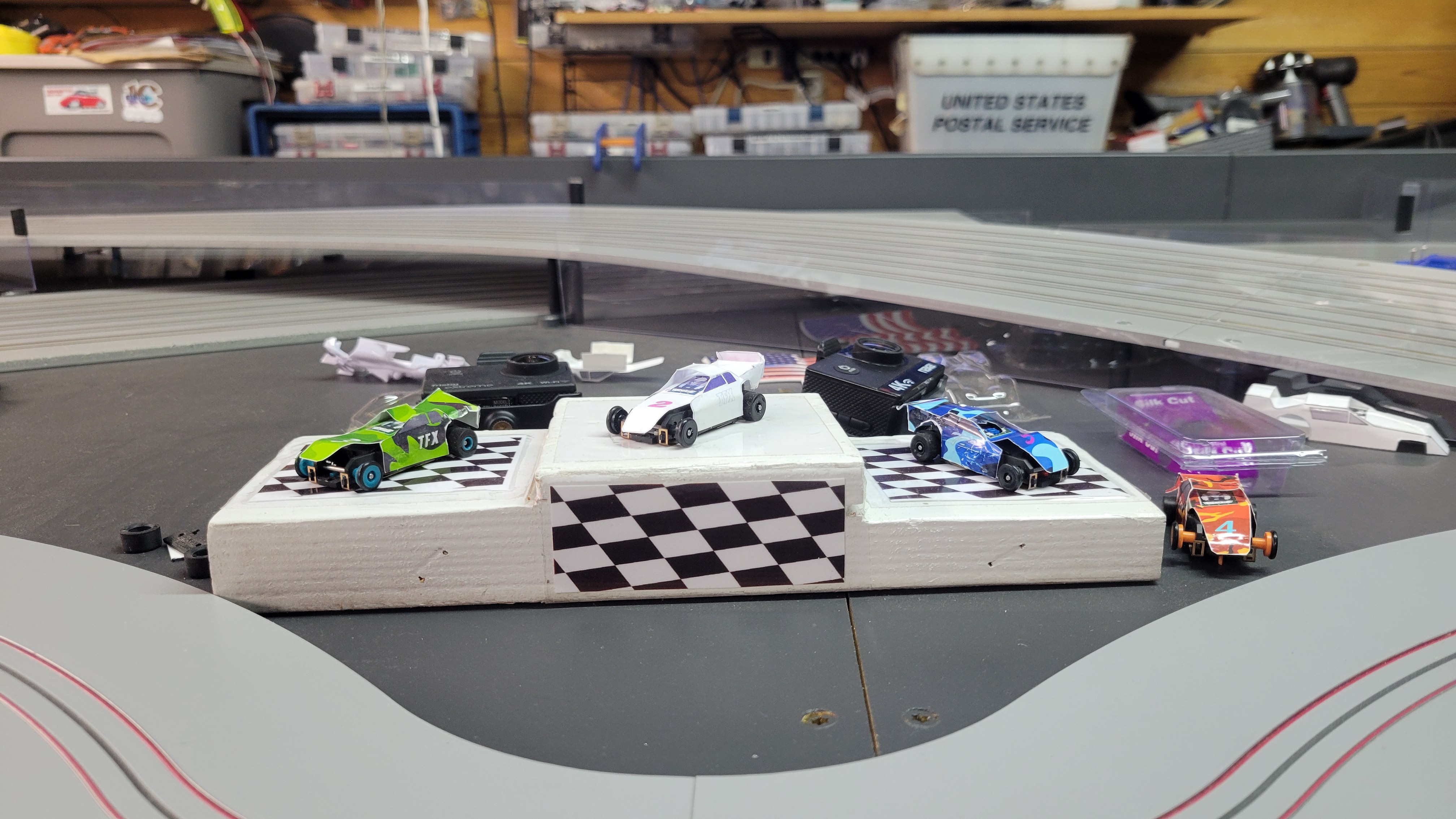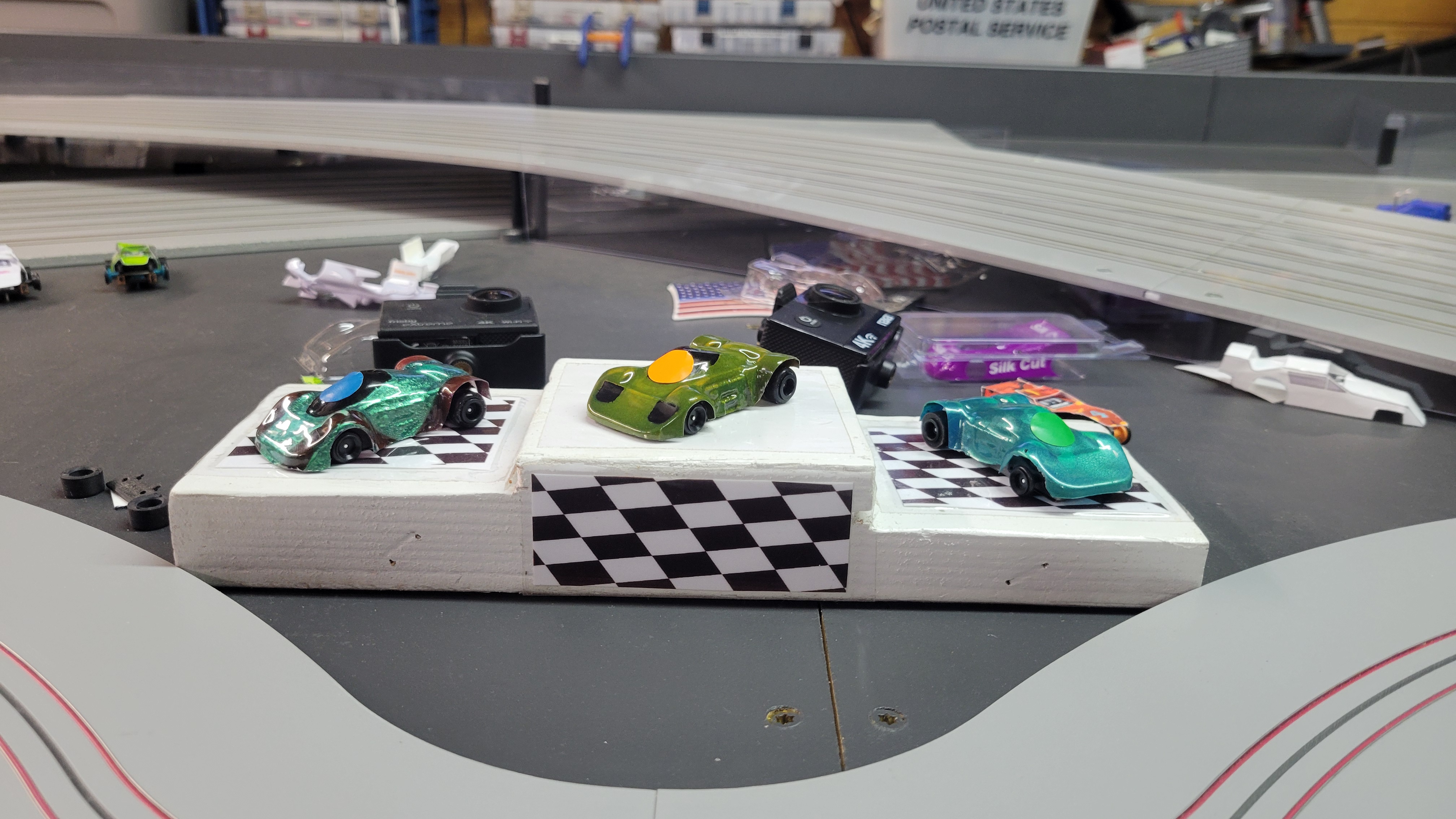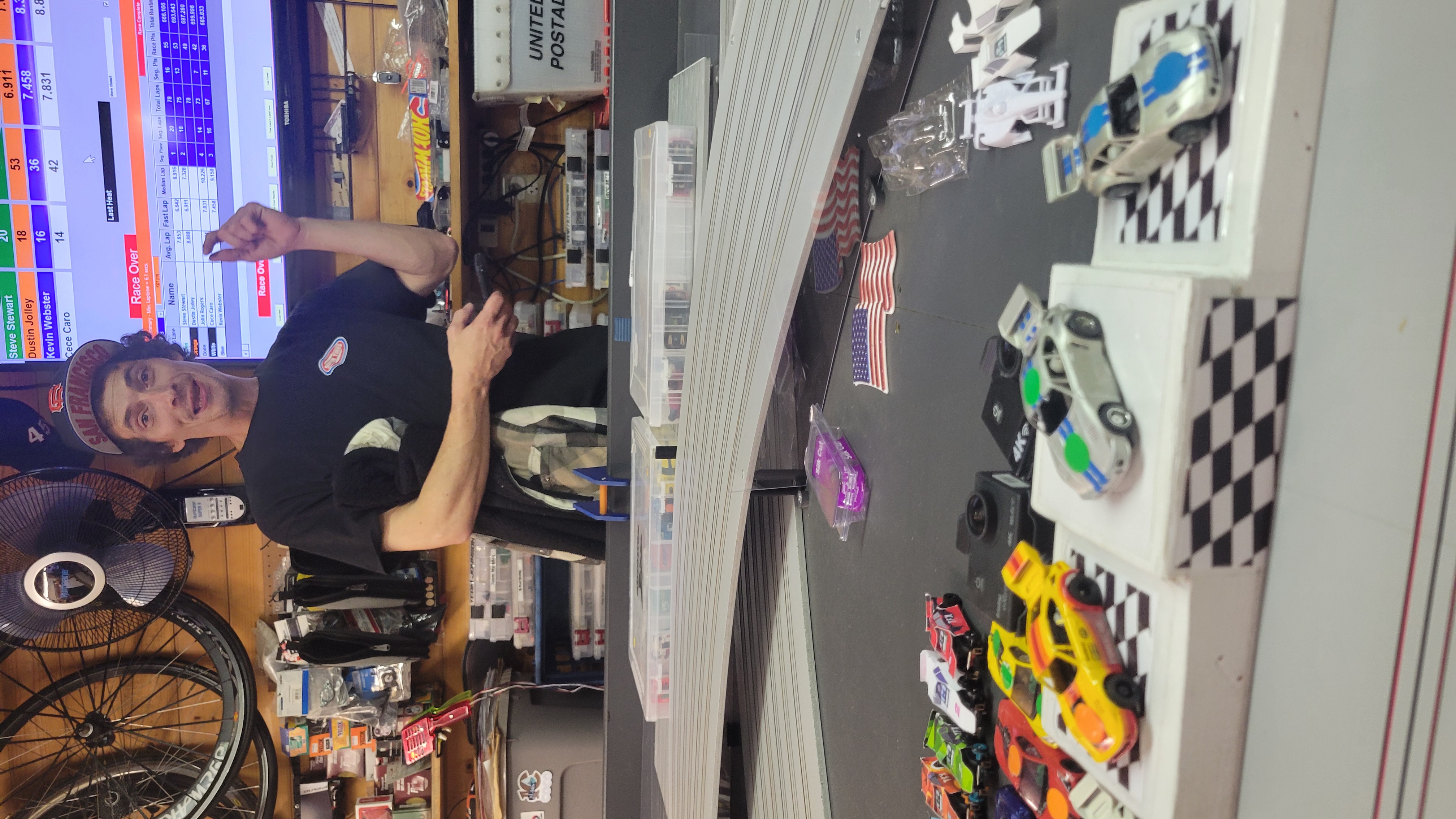
Monday Night “Under The Lights” April 6, 2026 — Only Two Races, But They Were Epic!

AI-generated race analysis from the April 6th and 7th events at the SR3 Road Course Squeeze Lane, segmented to highlight the intense battles within both the Expert Division (Steve Stewart, Dean Donaldson, Dustin Jolley) and the Sportsman Division (Jeff Seltzer, Bev Seltzer, Mark Wialbut).

Overall Event Summary & Closest Finishes

The combined results across both classes created two distinct, thrilling narratives: a battle for second place in the Expert division and an absolute dead heat in the Sportsman division.

    • The Expert Duel: Steve Stewart dominated the event overall with 310 total laps. However, the closest finish of the entire event was between Dean Donaldson and Dustin Jolley. In Race 1, they tied exactly at 97 laps. In Race 2, Dean squeezed out 195 laps to Dustin’s 194. Ultimately, Dean claimed 2nd place overall with 292 laps, besting Dustin’s 291 by a single lap.

    • The Sportsman Dead Heat: Jeff Seltzer comfortably led the Sportsman group with 254 total laps. The battle for 5th overall, however, resulted in an exact tie in lap count between Bev Seltzer and Mark Wialbut, both completing exactly 235 laps across both races. Bev claimed 5th place on a tiebreaker, edging Mark out on segment points (67 to 65).


Race 1 Detailed Report: MegaG+ 1.7 Formula e (18v)

Track: SR3 Road Course Squeeze Lane

Segment Length: 25 Laps

Steve Stewart ran a flawless race, winning three of the six segments to take 1st place. Dean Donaldson and Dustin Jolley fought hard, both ending on the same lap, with Dustin officially taking 2nd on points/run time. In the Sportsman group, Jeff Seltzer put together a highly consistent run, while Mark and Bev traded fastest times in the later segments. Details

Race 1 Driver Performance Table

Place Division Driver Total Laps Total Points Fastest Lap Lane of Fastest Lap
1 Expert Steve Stewart 100 58 5.454s Orange (Seg 3)
2 Expert Dustin Jolley 97 58 5.540s Blue (Seg 6)
3 Expert Dean Donaldson 97 56 5.404s White (Seg 6)
4 Sportsman Jeff Seltzer 87 46 5.785s White (Seg 4)
5 Sportsman Mark Wialbut 85 32 6.009s Green (Seg 3)
6 Sportsman Bev Seltzer 78 32 6.175s Green (Seg 6)


Race 2 Detailed Report: Viper V-SPEC SPEC STOCK Lexan

Track: SR3 Road Course Squeeze Lane

Segment Length: 35 Laps

With longer segments, the Viper V-SPEC class allowed for blistering speeds. Steve Stewart again took the win, but the lap times plummeted across the board. Dean Donaldson set an incredibly fast pace, logging the overall fastest lap. The Sportsman division saw a massive highlight from Mark Wialbut, who laid down a lap time that rivaled the Experts. Details

Race 2 Driver Performance Table

Place Division Driver Total Laps Total Points Fastest Lap Lane of Fastest Lap
1 Expert Steve Stewart 210 93 4.269s Orange (Seg 4)
2 Expert Dean Donaldson 195 71 4.169s Green (Seg 4)
3 Expert Dustin Jolley 194 68 4.694s Blue (Seg 3)
4 Sportsman Jeff Seltzer 167 48 4.985s Green (Seg 5)
5 Sportsman Bev Seltzer 157 35 5.295s Blue (Seg 4)
6 Sportsman Mark Wialbut 150 33 4.468s White (Seg 5)

Note: Data extracted from and.

Sportsman Highlights:

      • Mark Wialbut’s Breakout Lap: While finishing 6th in lap count, Mark’s 4.468s lap in Segment 5 was absolutely spectacular. It was faster than Dustin Jolley’s best lap and earned Mark a permanent spot in the track record books.

      • Jeff Seltzer Breaks the Barrier: Jeff successfully broke the 5-second mark, logging a 4.985s lap to solidify his grip on the Sportsman lead.

      • Bev Seltzer’s Consistency: Bev hit her stride in Segment 4, laying down her best lap of 5.295s and securing the laps needed to tie Mark overall for the event.


New Track Records (Set April 6, 2026)

The aggressive driving from both divisions resulted in several new track records at the SR3 Road Course Squeeze Lane. Most notably, Sportsman driver Mark Wialbut captured a Lane 2 record alongside the Experts.

MegaG+ 1.7 Formula e (i) 18v Records:

      • Lane 2: 5.404s — Dean Donaldson

      • Lane 4: 5.454s — Steve Stewart

      • Lane 5: 5.517s — Steve Stewart

Viper V-SPEC SPEC STOCK Lexan Records:

      • Lane 1: 4.567s — Dean Donaldson

      • Lane 2: 4.468s — Mark Wialbut

      • Lane 3: 4.169s — Dean Donaldson

      • Lane 4: 4.269s — Steve Stewart

      • Lane 5: 4.403s — Dean Donaldson

      • Lane 6: 4.688s — Steve Stewart

We had a little controversy during the technical inspection of the Viper SPEC STOCK class podium finishers. Dean’s car had .328 front tires installed, while everyone else was running .350 fronts.  In Dean’s defense, our currently published rules “related” to this class of car, allow front and rear tire diameter changes, unrestricted.  We currently call this class “Viper V-SPEC SPEC STOCK Lexan,” which is not exactly accurate. HOPRA.net rules allow any diameter front or rear silicon tire. However, our version of the HOPRA rules allows a Lexan body, which HOPRA’s rules do not, only a factory hardbody.

So, all that said, I’m proposing that we clarify our rules for our Viper “SPEC STOCK” class (aka: Box Stock), which has, for the last year or so, verbally specified a completely stock (standard build) V-SPEC V1 Level-4 chassis, with only low-profile shoes, rear tire compound and diameter changes, and a Lexan body allowed. All other HOPRA SPEC STOCK rules apply. This will be considered our “Lite” version of the Viper V1 chassis.

To avoid further confusion, I’m in the process of updating our active car rules and will republish them as soon as possible.  The reason for our “Lite” or “Box Stock” classes is to better support entry into our program by drivers who lack the interest and/or the skills to “tune” or otherwise prepare cars for racing. I recognize the interest of several drivers to go faster and allow more modifications. I will work on a proposed set of new rules for both our MegaG+ 1.7 and our Viper V-SPEC platforms, which will give our more tech-savvy drivers more flexibility to prepare cars and compete in these higher-level car classes.

Season Points Standings Summary 🏁

Here is how the leaderboard looks when separated by skill level:

Expert Division 🏆

These drivers currently hold the top positions in the overall standings:

      • Steve Stewart: 4280 points

      • Dean Donaldson: 3573 points

      • Dustin Jolley: 3204 points

      • Joe Clarke: 1194 points

      • Kevin Webster: 278 points

Sportsman Division 🏎️

The Sportsman field is much larger, with several drivers in a close battle for the division lead:

      • Ramsey Wright: 570 points

      • Jeff Seltzer: 490 points

      • Joe Vargas: 330 points

      • Bev Seltzer: 325 points

      • Bill Whiteside: 300 points

        (Note: There are 21 additional drivers in this division further down the standings)

A big thanks to this awesome group of drivers for bringing great things to share (except Dean, who was supposed to bring SAUSAGES!) Seriously, it was a great meal prepared by Kathy, and all kinds of treats to go along with it. Thank you all!!

Given that we were only able to get two races completed in almost six hours, we may have to reinstitute a strict RMS-controlled 90-second rotation time. We’re taking way too much time between segments these days.

Okay, shut up and drive!

Thursday Night “Under The Lights” — High-Speed Battles and Photo Finishes (April 2, 2026)

Mostly AI-generated content

The green flag dropped at Stewart Raceway on April 2, 2026, kicking off a marathon night of slot car racing! With four distinct classes testing our drivers across both the SR3 Road Course (Squeeze Lane) and the Stewart Raceway II Straight Road Course, the night demanded both technical precision and raw, wide-open speed.

After over 2,400 combined laps of intense side-by-side action, here is your definitive race recap.


🏆 Overall Event Standings

Consistency is king in slot car racing, and Steve Stewart proved it by never finishing below second place across all four events, securing the overall victory. Meanwhile, John Rogers and Dean Donaldson fought a dead-heat battle for laps, with Rogers taking the final podium spot entirely on segment points!

Overall Place Driver Total Laps Total Points Total Time (s)
🥇 1st Steve Stewart 416 220 2736.857
🥈 2nd Dustin Jolley 407 210 2672.601
🥉 3rd John Rogers 401 209 2687.603
4th Dean Donaldson 401 192 2693.302
5th Cece Caro 374 159 2715.913
6th Joe Clarke 347 138 2718.592

Closest Head-to-Head Sprint: Race 4, Segment 3

If we look at the closest side-by-side racing within a single heat, the crown goes to Joe Clarke and John Rogers during Segment 3 of the Viper V-SPEC race on the straight road course.

      • Both drivers ran a flawless heat, maxing out the segment cap at 30 laps.

      • Joe Clarke completed his 30 laps in 121.139 seconds.

      • John Rogers completed his 30 laps in 124.364 seconds.

      • The Margin: After 30 blistering laps in the fastest cars of the night, Clarke beat Rogers by a microscopic 3.225 seconds.

If we look for the closest true race—where both drivers ran the exact same number of laps in a heat—the crown goes to John Rogers and Dustin Jolley. They both maxed out the segment cap at 25 laps.

      • John Rogers (Yellow Lane): 161.633 seconds

      • Dustin Jolley (Blue Lane): 161.666 seconds

      • The Gap: 0.033 seconds

      • Context: After 25 laps of side-by-side racing, John Rogers beat Dustin Jolley to the line by just 33 milliseconds. This was the tightest pure racing finish of the entire night.


🏁 Race Breakdowns

Race 1: MegaG+ 1.7 Formula e (i) 18v

Track: SR3 Road Course Squeeze Lane

The night began on the highly technical Squeeze Lane. Surviving the squeeze requires patience, and Steve Stewart capitalized on a steady rhythm to take the inaugural win of the evening. Dean Donaldson threw down the gauntlet with a blistering fastest lap in Segment 6, but Stewart’s volume secured the gold. Details

      • Fastest Lap: Dean Donaldson (5.491s)

      • 1st Place: Steve Stewart (99 Laps | 56 Pts)

      • 2nd Place: Dustin Jolley (98 Laps | 55 Pts)

      • 3rd Place: Dean Donaldson (95 Laps | 54 Pts)

Race 2: Mega-G+ 1.7 Lites (Support Class)

Track: SR3 Road Course Squeeze Lane

The support class delivered the closest finish of the night. Dustin Jolley and Steve Stewart crossed the line with an identical 99 laps. However, Jolley’s aggressive sector times paid off, giving him a massive 61 segment points to take the victory on the tiebreaker!  Details

      • Fastest Lap: Dustin Jolley (5.519s)

      • 1st Place: Dustin Jolley (99 Laps | 61 Pts)

      • 2nd Place: Steve Stewart (99 Laps | 56 Pts)

      • 3rd Place: Dean Donaldson (97 Laps | 53 Pts)

Race 3: Tyco 440-X2 Wide-Pan Porsche 935 Hardbody

Track: Stewart Raceway II Straight Road Course

Transitioning to the SR2 Straight Road Course, the drivers broke out the classic Tyco hardbodies. Dustin Jolley carried his momentum from Race 2 to secure back-to-back victories. Notably, John Rogers fought his way onto the podium here, despite running two laps fewer than Jolley, by racking up a field-leading 56 segment points. Details

      • Fastest Lap: Steve Stewart (5.006s)

      • 1st Place: Dustin Jolley (99 Laps | 50 Pts)

      • 2nd Place: Steve Stewart (98 Laps | 47 Pts)

      • 3rd Place: John Rogers (97 Laps | 56 Pts)

Race 4: Viper V-SPEC SPEC STOCK Lexan

Track: Stewart Raceway II Straight Road Course

The finale was an absolute blur. The Viper V-SPECs delivered the highest speeds and lap counts of the event. Steve Stewart found another gear, putting down a staggering 120 laps to cement his overall event win. But the loudest cheer of the race went to Cece Caro, who unleashed the “Lap of the Night” by ripping a jaw-dropping 3.219-second lap in Segment 6. Details

      • Fastest Lap: Cece Caro (3.219s)

      • 1st Place: Steve Stewart (120 Laps | 61 Pts)

      • 2nd Place: John Rogers (118 Laps | 56 Pts)

      • 3rd Place: Dean Donaldson (115 Laps | 40 Pts)


Driver of the Night: Steve Stewart for a masterful display of consistency, but honorable mention goes to John Rogers for a gritty comeback in the second half of the event to secure an overall podium finish!

⏱️ New Track Records Set!

The April 2nd event wasn’t just about podiums; several new blistering track records were etched into the history books on the SR3 Road Course Squeeze Lane:

      • Mega-G+ 1.7 Lites (Support Class):

        • Dustin Jolley set a new record on Lane 2 with a time of 5.519s.

        • Dustin Jolley set a new record on Lane 3 with a time of 5.524s.

        • Dustin Jolley set a new record on Lane 4 with a time of 5.533s.

        • Dustin Jolley set a new record on Lane 5 with a time of 5.567s.

      • MegaG+ 1.7 Formula e (i) 18v:

        • Dean Donaldson set a new record on Lane 2 with a time of 5.529s.

        • Dean Donaldson set a new record on Lane 3 with a time of 5.636s.

        • Dean Donaldson set a new record on Lane 4 with a time of 5.491s.

        • Dean Donaldson set a new record on Lane 5 with a time of 5.640s.

See you all at the next race! Make sure your shoes are flat, and your tires are clean.


Big thanks to everybody for helping to make the event a huge success. Oh, and a special thanks to Full-Speed Racing and Clarke Racing. Dean brought the delicious beef stew, and Joe brought the awesome chocolate cream pie!

Okay, shut up and drive!

Wednesday Night “Under The Lights” March 25, 2026 — The Squeeze Lane Returns

Not one, but two new drivers in the field for this one. Dean Donaldson (Full-Speed Racing) continues to dominate the competition for 2026 Promoter of the Year. Introducing “Wild Bill” Whiteside and “Tracker Clay.”

      • Bill is a local racer from the Stetson Road area and, obviously, a very talented one.
      • Tracker Clay is actually a code name for Eric Newton, who lives in Campbell, and a good friend was invited to race with us by another great local driver, Max Dunn.
Mostly AI-generated from here.

Overall Results:

Wednesday Night Under The Lights Event (Three Races on SR3 Squeeze Lane Road Course) The Stewart Raceway Wednesday Night Under The Lights event consisted of three races on the SR3 track using the Squeeze Lane road course layout. Steve Stewart dominated with 370 laps and 216 points, but the field was competitive among the top four, separated by just 26 laps. 

Place
Name
Laps
Points
Total Time (sec)
1
Steve Stewart
370
216
3411.162
2
Dustin Jolley
358
172
3524.342
3
Bill Whiteside
347
150
3564.999
4
Dean Donaldson
344
164
3517.826
5
Ramsey Wright
301
104
3537.086
6
Max Dunn
132
40
1348.612
7
Tracker Clay
97
30
1368.364

Three-Race Analysis

Total run times for the top five drivers cluster tightly around 3400–3565 seconds (roughly 57 minutes of actual racing across three heats), indicating consistent event pacing with each race likely running 18–20 minutes. The Squeeze Lane’s tight central section amplified differences in setup and driver technique, rewarding cars that could maintain momentum through the narrow pinch point while punishing minor errors.

Key metrics calculated from the data:

    • Average Lap Time (seconds/lap): Total time ÷ laps (lower = faster).
      • Steve Stewart: 9.219 (strongest pace overall)
      • Dustin Jolley: 9.845
      • Dean Donaldson: 10.226
      • Bill Whiteside: 10.274
      • Ramsey Wright: 11.752
      • Max Dunn: 10.216
      • Tracker Clay: 14.107 (highest, indicating significant adaptation challenges)
    • Points Efficiency (points/lap): Points ÷ laps (higher = better scoring relative to distance).
      • Steve Stewart: 0.584 (highest – dominant consistency)
      • Dean Donaldson: 0.477
      • Dustin Jolley: 0.480
      • Bill Whiteside: 0.432
      • Ramsey Wright: 0.345
      • Max Dunn: 0.303
      • Tracker Clay: 0.309

Top-three battle: Steve, Dustin, and Bill were separated by only 23 laps total, with Steve’s superior average lap time and points haul securing the win. Dean Donaldson’s 4th-place finish is notable—he scored more points than Bill despite fewer laps, suggesting stronger individual race wins or segment bonuses on the Squeeze Lane, where clean runs through the narrow section paid big dividends.

    • Ramsey Wright (5th, 301 laps, 104 points, 3537.086 s): Solid mid-pack endurance but the slowest average pace among full participants (11.752 s/lap). His points efficiency was the lowest of the top five, indicating he was rarely contending for top segment finishes. The Squeeze Lane likely exposed setup or driving-line issues in the narrow section, costing him 1–2 seconds per lap compared with the leaders. With only 301 laps (roughly 20–25 laps per race behind the winner), small improvements in consistency could push him into podium contention next event.
    • Max Dunn (6th, 132 laps, 40 points, 1348.612 s): Participated in approximately one-and-a-half races (roughly half the laps and time of the leaders). His 10.216 s/lap average was respectable and actually faster than several full-event runners, suggesting strong pace when on track but limited participation—possibly due to mechanical issues, scheduling, or testing. Points efficiency (0.303) was low, implying he didn’t convert speed into high finishes in the segments he ran. The Squeeze Lane’s demands may have contributed to early exits or conservative driving.
    • Tracker Clay (7th, 97 laps, 30 points, 1368.364 s): Clearest example of the Squeeze Lane’s difficulty for newer or less-practiced drivers. Only ~97 laps across the three races (likely partial runs) with the event’s slowest average (14.107 s/lap) points to repeated time losses in the narrow squeeze zone. His low points total (30) and efficiency reflect minimal segment success. However, completing any laps on this layout shows commitment; targeted practice on the pinch point and minor car tweaks (gearing, tires, or body alignment) could yield rapid gains in future events.

Overall takeaways: Steve Stewart’s lap and points dominance confirmed his mastery of the Squeeze Lane layout. The event highlighted how the narrow section turned small setup differences into large lap gaps—especially for the lower placers. Dean Donaldson’s high points despite 4th in laps shows the scoring system rewards racecraft on technical sections. For the back half of the field, the Squeeze Lane proved unforgiving, but their respectable fastest-lap potential (visible in the pace of Max Dunn when running) indicates upside. Expect closer racing next time with refined setups tailored to the squeeze section.

Race 1 Analysis

Track: SR3 Road Course Squeeze Lane
Date: March 25, 2026
Class: Mega-G+ 1.7 Lites (Support Class)
Format: 7 × 25-lap segments (lane rotation + 1 driver sits out each segment)

Final Standings

Place
Name
Total Laps
Total Points
Total Run Time
Avg Lap Time
1
Steve Stewart
150
91
1,335.025 s
8.900 s
2
Dustin Jolley
147
80
1,351.608 s
9.195 s
3
Dean Donaldson
138
67
1,370.473 s
9.931 s
4
Bill Whiteside
138
54
1,372.458 s
9.945 s
5
Max Dunn
132
40
1,348.612 s
10.217 s
6
Ramsey Wright
125
44
1,365.594 s
10.925 s
7
Tracker Clay
97
30
1,368.364 s
14.107 s

Details

Scoring note: In each segment, points are awarded 16 / 13 / 11 / 7 / 6 / 5 for 1st–6th place. Sitting out = 0 points.
Tiebreakers: Total laps first, then total points.

Key Takeaways

      • Steve Stewart’s dominant comeback
        He sat out Segment 1 (0 laps, 0 points) but still won the race by 3 laps over Dustin Jolley. Once he started racing in Segment 2, he was nearly perfect:

        • Ran full 25 laps in every one of his 6 segments (150 laps total).
        • Won 5 of 6 segments he ran (16 points each) + 1 third-place finish (11 points) = 91 total points.
        • Fastest overall pace by a wide margin (8.900 s/lap).
      • Dustin Jolley led early (won Segments 1 & 3) and stayed in the hunt with 147 laps, but lost ground with a couple of lower-lap segments (23 in Seg 4, 24 in Seg 6). Still an excellent 2nd-place effort.
      • Dean Donaldson vs. Bill Whiteside
        Both finished with 138 laps, but Dean’s higher segment points (67 vs. 54) gave him the clear 3rd-place tiebreaker.
      • Pace comparison (overall average lap time)
        Steve Stewart was in a class by himself. The top four drivers were all under ~10 seconds per lap, while the field dropped off noticeably after that.
      • Segment winners
        • Seg 1: Dustin Jolley
        • Seg 2: Steve Stewart
        • Seg 3: Dustin Jolley
        • Seg 4: Steve Stewart
        • Seg 5: Steve Stewart
        • Seg 6: Steve Stewart
        • Seg 7: Steve Stewart

Steve essentially took control of the race the moment he entered and never relinquished it. This was a classic “miss a segment but still win” performance thanks to flawless full-segment runs and consistently strong lap times once he was on track. The Mega-G+ 1.7 Lites look quick on the SR3 Squeeze Lane — several sub-6-second fastest laps were turned across the night. 

Race 2 Analysis

Track: SR3 Road Course Squeeze Lane
Date: March 25, 2026
Class: OS3 TFX Super Lite (i)
Format: 5 × 25-lap segments (lane rotation + 1 driver sits out each segment)
Final Standings

Place
Name
Total Laps
Total Points
Total Run Time
Avg Lap Time
1
Steve Stewart
100
64
1,282.398 s
12.824 s
2
Dustin Jolley
94
47
1,364.788 s
14.519 s
3
Bill Whiteside
93
48
1,342.930 s
14.440 s
4
Dean Donaldson
90
44
1,332.660 s
14.807 s
5
Ramsey Wright
81
32
1,376.179 s
16.989 s

Details

Scoring note: 16 / 13 / 11 / 7 points for 1st–4th in each segment (5 drivers = 1 sits out each time). Tiebreakers: total laps first, then total points.

Key Takeaways

      • Steve Stewart’s repeat masterclass
        Sat out Segment 1 (0 laps, 0 points) but still cruised to victory. Once he entered the race:

        • Ran perfect 25 laps in all 4 segments he drove = 100 laps total.
        • Won every single segment he ran (16 points × 4 = 64 total points).
        • Blisteringly fast pace for this class (12.824 s/lap overall — over 1.5 seconds quicker per lap than anyone else).
      • Dustin Jolley again led early (won Segment 1) and stayed competitive, but the missed Segment 3 + a couple of 22-lap segments cost him. Still a solid 2nd.
      • Bill Whiteside edged Dustin in total points (48 vs 47) but finished 3rd because he completed 1 fewer lap.
      • Pace comparison (overall average lap time)
        Steve was in a league of his own. The rest of the field was tightly bunched in the mid-14-second range, with Ramsey Wright struggling to stay under 17 seconds.
      • Segment winners
        • Seg 1: Dustin Jolley
        • Seg 2: Steve Stewart
        • Seg 3: Steve Stewart
        • Seg 4: Steve Stewart
        • Seg 5: Steve Stewart

This was another “sit out the first heat and still dominate” performance from Steve — identical script to Race 1, just on a shorter 5-segment schedule and with slower TFX Super Lite cars. The OS3 class clearly runs about 4–5 seconds per lap slower than the Mega-G+ 1.7 Lites from earlier in the evening. 

Race 3 Analysis

Track: SR3 Road Course Squeeze Lane
Date: March 25, 2026
Class: Viper V-SPEC SPEC STOCK Lexan
Format: 5 × 30-lap segments (lane rotation + 1 driver sits out each segment)
Final Standings

Place
Name
Total Laps
Total Points
Total Run Time
Avg Lap Time
1
Steve Stewart
120
61
793.739 s
6.614 s
2
Dustin Jolley
117
45
807.946 s
6.906 s
3
Dean Donaldson
116
53
814.693 s
7.023 s
4
Bill Whiteside
116
48
849.611 s
7.324 s
5
Ramsey Wright
95
28
795.313 s
8.372 s

Details

Scoring note: 16 / 13 / 11 / 7 points for 1st–4th in each segment (5 drivers = 1 sits out each time). Tiebreakers: total laps first, then total points.

Key Takeaways
      • Steve Stewart’s hat-trick of dominant comebacks
        Sat out Segment 1 again (0 laps, 0 points) but still won the race by 3 laps over Dustin Jolley. Once he joined:

        • Ran perfect 30 laps in all 4 segments he drove = 120 laps total.
        • Won 3 of 4 segments (16 points each) + one 2nd-place finish (13 points) = 61 total points.
        • Blistering overall pace (6.614 s/lap — over 0.29 seconds faster per lap than 2nd place).
      • Dustin Jolley started strong (won Segment 1) and stayed in the fight with consistent 28–30 lap segments, but the missed Segment 3 and one lower finish kept him in 2nd.
      • Dean Donaldson vs. Bill Whiteside
        Both ended with 116 laps, but Dean’s higher segment points (53 vs. 48) secured 3rd place.
      • Pace comparison (overall average lap time)
        This Viper V-SPEC SPEC STOCK Lexan class was dramatically faster than the earlier races (~6.6–7.3 s/lap for the leaders vs. ~9 s for Mega-G+ and ~13–15 s for OS3 TFX). Steve was again the clear pace-setter.
      • Segment winners
        • Seg 1: Dustin Jolley
        • Seg 2: Dean Donaldson
        • Seg 3: Steve Stewart
        • Seg 4: Steve Stewart
        • Seg 5: Steve Stewart

Same script as Races 1 and 2 — Steve skips the first heat, then takes over and never looks back. The Viper class produced some seriously quick times (multiple sub-5-second fastest laps across the night).

Announcements:

    • Dustin Jolley (Team Jolley) was upgraded to the Expert division a few weeks ago. Dustin topped the Sporstman points chase after five consecutive “Under The Lights” events. He’s currently in 3rd place in the Expert division.
    • Joe Clarke (Clarke Racing) also advances to the Expert division after leading the Sportsman points chase after five consecutive “Under The Lights” events.

Dustin has a placing average of 2.1 and an average lap time of 7.423. Joe has an average placing of 3.4 and an average lap time of 7.525.  Congrats!

We’re shooting for next Thursday night for another “Under The Lights” event and the beginning of a new five-event series. Stay tuned for confirmation and details.

Okay, shut up and drive!

Wednesday Night “Under The Lights” March 11, 2026 — The Bus Stop Strikes Again

Wow! Another blazingly fast and furious night of slot car racing in the Santa Cruz Mountains. This was the fourth “Under The Lights” event of 2026, and we ran on both SR3 and SR2 road courses.

Race and Overall Results Analysis AI-Generated

Short Story

Wednesday Night Under The Lights Event (Four Races on SR2 and SR3 Bus Stop Road Course)The Stewart Raceway’s Wednesday Night Under The Lights event featured four intense races on both the SR2 and SR3 tracks, utilizing the new SR3 Bus Stop road course layout. This challenging configuration emphasizes technical driving, with tighter turns and strategic passing opportunities that test consistency, speed, and car setup. Based on the aggregate data from the four races, the overall standings prioritize total laps completed, reflecting endurance and reliability in a fixed-time or segment-based format typical for slot car events at Stewart Raceway.

Place
Name
Laps
Points
Total Time (seconds)
1
Steve Stewart
427
188
2595.671
2
Joe Clarke
417
201
2562.866
3
Dean Donaldson
415
208
2553.719
4
Kevin Webster
367
134
2576.835
5
Dustin Jolley
233
115
1142.791

This event combined races across SR2 (likely a flatter, more flowing layout) and SR3 (a routed track with potentially faster averages due to smoother surfaces), incorporating the new Bus Stop chicane for added complexity. The Bus Stop section introduces a series of sharp, low-speed turns that reward precise throttle control and penalize over-aggressive driving, often leading to off-track moments or reduced lap counts for less experienced drivers. Total times for the top four drivers hover around 2550-2600 seconds (approximately 42-43 minutes across four races, suggesting each race lasted about 10-11 minutes), indicating a consistent event duration with variable lap completion based on pace and incidents.Key metrics calculated from the data:

    • Average Lap Time (seconds/lap): Total time divided by laps, where lower is better (faster pace).
    • Dustin Jolley: 4.905 (fastest overall, suggesting strong performance in fewer races, possibly on the quicker SR3 layout).
    • Steve Stewart: 6.078
    • Joe Clarke: 6.146
    • Dean Donaldson: 6.153
    • Kevin Webster: 7.019 (slowest, indicating potential setup issues or adaptation challenges on the Bus Stop course).
    • Points Efficiency (points/lap): Points divided by laps, where higher indicates better scoring relative to distance covered (e.g., via podium finishes or bonuses).
    • Dean Donaldson: 0.501 (highest, showing exceptional racecraft and consistency across segments).
    • Dustin Jolley: 0.493
    • Joe Clarke: 0.482
    • Steve Stewart: 0.440
    • Kevin Webster: 0.365 (lowest, possibly due to lower finishes in individual races).

The top three drivers (Steve, Joe, and Dean) demonstrate tight competition, with only 12 laps separating them over four races—equivalent to about 1-2 laps per race. Their similar total times and average lap speeds (around 6.1-6.2 seconds) point to a closely matched field, where small differences in handling the Bus Stop chicane likely decided outcomes. Points tell a different story: Dean’s lead in points (208) despite fewer laps than Steve suggests he dominated individual races or segments, perhaps with multiple wins or high placements on both SR2 and SR3. Joe’s 201 points are impressive for second in laps, indicating reliable top finishes without the raw volume of the leader.

Lower placers faced clearer challenges:

    • Kevin Webster (4th place, 367 laps, 134 points, 2576.835 seconds): Webster’s performance shows resilience in completing a solid lap count but lags in pace (7.019 s/lap average) and efficiency (0.365 pts/lap). This could stem from mechanical tweaks needed for the new Bus Stop layout, which demands optimized traction in low-speed sections. His total time aligns with the leaders, suggesting he avoided major DNFs but struggled with consistency on SR3’s routed surface. With adjustments, Webster could push for podiums in future events, as his endurance highlights potential for multi-race formats.
    • Dustin Jolley (5th place, 233 laps, 115 points, 1142.791 seconds): Jolley’s outing stands out for its speed (blistering 4.905 s/lap average) but limited scope—roughly half the laps and time of the leaders, implying participation in only two races (perhaps focusing on SR3, where faster times are common). His points efficiency (0.493 pts/lap) is near the top, suggesting strong results in those races, like wins or fast laps. If absences were due to scheduling or testing, this bodes well for full events; otherwise, it underscores the Bus Stop course’s unforgiving nature for part-time runs. Jolley’s raw pace makes him a threat in shorter sprints.

Overall, this four-race event with the new Bus Stop road course highlighted the balance between speed, strategy, and reliability at Stewart Raceway. Steve Stewart’s lap dominance secured the win, but Dean Donaldson’s points haul signals a rising star in the Expert class. The event’s multi-track format (SR2 and SR3) added variety, with the Bus Stop chicane likely amplifying differences in driver adaptation. For future races, expect tweaks to car setups (e.g., Viper or MegaG+ classes) to better handle the technical demands.

Race 1: Webster Wizzard Storms (i)

Race 1 Analysis Summary: SR3 Road Course Bus Stop Layout (Wizzard Storms Class) Event Overview: This race on the new Bus Stop layout at Stewart Raceway’s SR3 track (routed for smoother, faster runs) took place on March 11, 2026, starting at 18:42. The Wizzard Storms (i) class featured four drivers in a heat-style format with four segments, each targeting 25 laps. The Bus Stop chicane added technical demands, emphasizing precise braking and acceleration out of tight turns, which amplified differences in car setup and driver adaptation. Scoring awarded points per segment (16 for 1st, 13 for 2nd, 11 for 3rd, 7 for 4th), with total laps as the primary tiebreaker. Steve Stewart emerged victorious with 97 total laps and 47 points, edging out Dean Donaldson (95 laps, 59 points) in a close battle. However, the analysis below emphasizes the lower placings—particularly Kevin Webster’s consistent 4th overall (84 laps, 36 points)—highlighting challenges, improvements, and potential for future races.

Final Standings Table (Aggregated from All Segments):

Place
Name
Total Laps
Total Points
Total Run Time (s)
Avg Lap Time (s)
Fastest Lap (s)
Median Lap Time (s)
1
Steve Stewart
97
47
700.439
7.221
5.340
6.305
2
Dean Donaldson
95
59
687.056
7.232
5.280
6.548
3
Joe Clarke
91
46
693.463
7.620
5.469
6.512
4
Kevin Webster
84
36
701.067
8.346
5.785
7.557

Notes on Aggregates: Average lap times are calculated as total run time divided by total laps (lower is better, indicating faster pace). Fastest and median laps are the best across all segments. Kevin’s higher average (8.346s) reflects adaptation struggles on the Bus Stop, but his fastest lap (5.785s) shows flashes of competitiveness, suggesting setup tweaks could elevate him.

Segment-by-Segment Breakdown:

    • Segment #1 (Blue/Orange/Green/White Lanes): Dean Donaldson dominated from Blue lane with a 7.551s average and 25 laps, setting a strong tone. Joe Clarke followed closely in Orange. Steve Stewart took 3rd with 24 laps, but the focus here is Kevin Webster’s 4th (16 laps, 12.006s average)—his slowest segment, likely due to initial unfamiliarity with the Bus Stop’s low-speed sections, where his median (10.565s) ballooned from poor traction or over-driving turns. This early deficit (9 laps behind the leader) compounded his overall standing, but his fastest lap (7.785s) hinted at potential once dialed in. Total time: ~187-191s across drivers, showing even pacing despite Kevin’s lap shortfall.
    • Segment #2 (Orange/Blue/White/Green Lanes): Lane rotations mixed things up, with Steve Stewart surging to 1st (25 laps, 6.251s average) in Orange. Dean and Kevin tied at 20 laps for 3rd/4th. Emphasizing lower spots: Kevin’s 4th (20 laps, 8.043s average in Green) marked improvement over Segment #1, closing the gap to just 5 laps behind the winner. His median (7.217s) tightened, suggesting better adaptation to the chicane, possibly via throttle adjustments. However, his average remained highest, indicating consistency issues—perhaps voltage or tire grip problems on SR3’s surface. Joe (2nd) and Dean (3rd) pulled ahead cumulatively, but Kevin’s 7 points here kept him in contention. Segment time: ~158-162s, with Kevin’s run time (161.657s) competitive despite fewer laps.
    • Segment #3 (Blue/Green/White/Orange Lanes): Dean reclaimed 1st (25 laps, 6.416s average in Green), with Steve close in 2nd. Joe slipped to 4th (18 laps), but the lower emphasis falls on him and Kevin (3rd, 23 laps in Orange). Kevin’s performance here was his strongest relatively—beating Joe by 5 laps with a 7.357s average and 6.386s median, showing marked progress on the Bus Stop. His fastest (5.785s) rivaled the leaders, suggesting he thrived in Orange lane’s flow. Joe’s 4th (8.564s average in White) was uncharacteristic, possibly from a setup mismatch or off-track incidents inflating his median (6.954s). This segment highlighted lower placers’ variability: Kevin gained ground (now 11 laps behind overall leader), while Joe’s dip (7 points) cost him momentum. Segment time: ~161-169s, with Kevin’s longer run (168.830s) reflecting sustained effort.
    • Segment #4 (White/Orange/Green/Blue Lanes) / Final: Dean won the segment (25 laps, 6.571s average in Orange), but Steve’s overall laps secured the race win. Joe rebounded to 2nd. Focusing on lower: Steve took 4th here (23 laps, 7.834s average in White)—unusual for the winner, perhaps due to fatigue or lane disadvantage, with his median (6.508s) still solid. Kevin’s 3rd (25 laps in Blue) was his best finish, tying the segment high and narrowing his total deficit. His 7.264s average and 6.670s median showed full adaptation, with a 6.144s fastest lap competitive against Dean’s 5.280s. This late surge (11 points) mitigated earlier struggles but couldn’t overcome the cumulative lap gap. Joe’s consistency (25 laps) solidified 3rd overall, while Kevin’s 4th underscored the Bus Stop’s learning curve for him.

Key Insights on Lower Placings:

Kevin Webster’s race epitomized the challenges of the new Bus Stop layout—starting slow (16 laps in Seg. #1) due to high averages (12s+), but progressively improving (20, 23, 25 laps) as he refined his line through the chicane. His overall 8.346s average was 1s+ slower than the top three, pointing to setup opportunities (e.g., gearing for better low-speed torque in Wizzard Storms cars). Flashes of speed (sub-6s laps) suggest he’s podium-capable with practice. Joe Clarke’s brief 4th in Seg. #3 (18 laps) was an outlier, likely incident-related, but didn’t derail his 3rd overall. For lower drivers, lane assignments played a role—Kevin excelled in Orange/Blue (Seg. #3/#4)—while the format rewarded endurance over pure speed. Future races could see Kevin climb with targeted tweaks, making the Bus Stop a equalizer for emerging talent. Details

Race 2: MegaG+ 1.7 Modified Class

The second race of the Wednesday Night Under The Lights event at Stewart Raceway occurred on March 11, 2026, starting at 20:48. Featuring the MegaG+ 1.7 Modified class on the SR3 track with the new Bus Stop layout, this four-segment heat emphasized car modifications for enhanced speed and handling in the chicane’s tight turns. Each segment aimed for 25 laps, with points per segment (16/13/11/7 for 1st-4th). Dean Donaldson and Joe Clarke tied at 98 laps, but Dean’s 52 points edged him to victory via higher segment wins. Steve Stewart (97 laps, 47 points) took 3rd. The analysis below focuses on lower placings, particularly Kevin Webster’s 4th overall (93 laps, 38 points) and segment-specific struggles for others like Steve in early heats, highlighting adaptation to the Bus Stop’s demands in modified cars.
Final Standings Table (Aggregated from All Segments):

Place
Name
Total Laps
Total Points
Total Run Time (s)
Avg Lap Time (s)
Fastest Lap (s)
Median Lap Time (s)
1
Dean Donaldson
98
52
715.334
7.299
5.520
6.240
2
Joe Clarke
98
51
734.261
7.493
5.538
6.676
3
Steve Stewart
97
47
719.710
7.420
5.555
6.033
4
Kevin Webster
93
38
733.972
7.892
6.135
6.939

Notes on Aggregates: Average lap times derived from total run time divided by total laps (lower indicates better pace). Fastest laps are the minimum across segments; medians are approximated as averages of segment medians for overview. Kevin’s higher average (7.892s) and slowest fastest lap (6.135s) underscore setup challenges in the MegaG+ class on the Bus Stop, where modified cars demand precise tuning for low-speed grip.

Segment-by-Segment Breakdown:

    • Segment #1 (White/Green/Blue/Orange Lanes): Dean Donaldson led from White with 25 laps and a 7.789s average. Kevin Webster took a strong 2nd (25 laps), but lower emphasis on Joe Clarke’s 3rd (24 laps, 8.522s average in Blue) and Steve Stewart’s 4th (24 laps, 8.519s average in Orange). Both trailed by just 1 lap, but their higher averages (8.5s+) suggest initial struggles with the Bus Stop chicane—Joe’s median (8.262s) inflated likely from off-tracks, while Steve’s 6.358s median showed inconsistency despite a 5.730s fast lap. This early 4th for Steve (7 points) set a recovery challenge, highlighting Orange lane’s potential disadvantages on SR3. Segment times: ~193-204s, with lower placers’ longer runs reflecting cautious driving.
    • Segment #2 (White/Orange/Green/Blue Lanes): Joe surged to 1st (25 laps in White), with Steve 2nd. Emphasizing lower: Kevin Webster’s 3rd (24 laps, 7.709s average in Orange) and Dean Donaldson’s 4th (24 laps, 7.741s average in Green). Dean’s slip—unusual for the eventual winner—came with a solid 6.341s median but only 24 laps, possibly from setup tweaks mid-race or Green lane issues in the Bus Stop. Kevin’s 3rd was competitive (just 1 lap off), improving his average from Seg. #1, but his 6.898s median indicated lingering grip problems in turns. Both earned 11/7 points here, keeping totals close (Dean at 23, Kevin at 24 overall). Segment times: ~180-185s, showing tighter pacing, though lower placers’ times aligned closely with leaders.
    • Segment #3 (Green/Orange/White/Blue Lanes): Dean won (25 laps in Orange), Joe 2nd. Focus on lower: Steve Stewart’s 3rd (23 laps, 7.479s average in White) and Kevin Webster’s 4th (23 laps, 7.677s average in Blue). Tied in laps but separated by points (11 vs. 7), this segment exposed Bus Stop vulnerabilities—Steve’s 5.840s median was strong, but 2 laps short suggests incidents or power management in modified MegaG+ cars. Kevin’s 6.934s median and 6.135s fastest showed progress, yet his average remained high, pointing to Blue lane challenges or tire wear. Joe’s lead grew, but lower placers stayed within 2 laps, accumulating points (Steve to 31, Kevin to 31). Segment times: ~169-176s, with Kevin’s 175.840s reflecting sustained but slower effort.
    • Segment #4 (Blue/Orange/Green/White Lanes) / Final: Steve won the segment (25 laps in Green), Dean 2nd. Emphasizing lower: Joe Clarke’s 3rd (24 laps, 7.208s average in Orange) and Kevin Webster’s 4th (21 laps, 7.935s average in White). Joe’s 3rd—despite tying Dean’s total laps overall—stemmed from a 6.234s median but 1 lap shy, possibly fatigue or minor errors in the chicane. Kevin’s weakest segment (4 laps behind, highest 7.935s average) capped his race, with a 6.958s median suggesting White lane disadvantages or setup fatigue in the modified class. His 7 points here finalized 4th overall, but the 21 laps highlighted the Bus Stop’s toll on consistency. Segment times: ~165-176s, with lower placers’ longer runs (175s+) indicating endurance over speed.

Key Insights on Lower Placings: Kevin Webster’s consistent 4th overall reflected the MegaG+ 1.7 Modified class’s demands on the Bus Stop layout—strong starts (2nd in Seg. #1) faded to deficits (21 laps in finale), with averages ~0.5-1s slower than leaders due to medians in the 6.9s range, likely from grip or gearing issues in tight turns. Flashes like his 6.135s fastest suggest potential; tweaks could push him higher. Steve Stewart’s early 4th and mid-race 3rd showed recovery but cost points (47 total), emphasizing lane rotation impacts. Joe’s brief 3rd in the final prevented a win despite a lap tie, underscoring segment volatility. Lower drivers demonstrated resilience, with the Bus Stop equalizing the field in modified cars—future events may favor those mastering chicane setups. Details

Race 3: PR-5 GT F1 Hardbody (i)

The third race of the Wednesday Night Under The Lights event at Stewart Raceway took place on March 11, 2026, on the SR2 track with the new Bus Stop layout. This class featured MegaG+ 1.7 Lites cars, known for their balanced performance on road courses, with the Bus Stop chicane adding strategic depth through its series of tight turns that favor smooth driving and setup optimization. The race used a multi-segment heat format with five segments, each targeting 30 laps, and lane rotations (Yellow, Blue, White, Red) with one driver sitting out per segment to accommodate five participants. Dustin Jolley won with 120 laps and 58 points, but the analysis below focuses on the lower placings—Dean Donaldson (3rd, 110 laps, 47 points), Joe Clarke (4th, 114 laps, 42 points), and Kevin Webster (5th, 93 laps, 32 points)—highlighting their challenges, improvements, and areas for growth on the Bus Stop configuration.

Final Standings Table (Aggregated from All Segments):

Place
Name
Total Laps
Total Points
Total Run Time (s)
Avg Lap Time (s)
Fastest Lap (s)
Median Lap Time (s)
1
Dustin Jolley
120
58
608.263
5.069
4.044
~4.8
2
Steve Stewart
117
56
610.393
5.217
4.055
~4.9
3
Dean Donaldson
110
47
620.527
5.641
~5.0
~5.2
4
Joe Clarke
114
42
658.058
5.772
4.092
~5.4
5
Kevin Webster
93
32
628.190
6.754
~6.0
~6.5

Notes on Aggregates: Average lap times calculated as total run time divided by total laps (lower is better).  The faster paces (4-6s/lap) compared to Races 1-2 reflect SR2’s layout, potentially with less elevation or smoother surfaces, though the Bus Stop still penalized inconsistencies.

Segment-by-Segment Breakdown (Summarized from available data; full per-lane metrics limited):

    • Segment #1 (Joe Clarke out): Dustin Jolley dominated on Yellow with 30 laps (16 points, 4.595s average). Steve Stewart 2nd. Focusing on lower: Dean Donaldson and Kevin Webster trailed with fewer laps (exact counts not specified, but behind the top two), likely struggling with initial Bus Stop adaptation in their lanes. Kevin’s higher overall average suggests this segment highlighted his setup issues, possibly tire grip or gearing for the chicane, resulting in slower medians and a lap deficit that set a tough tone for his race.
    • Segment #2 (Dustin Jolley out): Steve Stewart won on Yellow (30 laps, 16 points). Dean 2nd (lap count not specified, but strong). Emphasizing lower: Kevin Webster and Joe Clarke both completed 27 laps (3rd and 4th), earning 11 and 7 points respectively. Joe’s sit-out in Seg. #1 meant he started from behind, and his 27 laps here showed a solid rebound but highlighted pacing issues on the Bus Stop, with averages potentially inflated by turns. Kevin’s consistent but mid-pack finish indicated ongoing challenges, perhaps lane-specific (e.g., Blue or White disadvantages), contributing to his lower efficiency.
    • Segment #3 (Steve Stewart out): Dean Donaldson won on Yellow (30 laps, 16 points). Dustin 2nd on Red. Focus on lower: Joe Clarke 3rd (lap count not specified, 11 points); Kevin Webster 4th with 18 laps in Blue (7 points). Kevin’s low lap count—12 behind the winner—was his weakest, possibly from off-tracks or mechanical hiccups in the Bus Stop’s tight sections, inflating his average to near 9s in some reports. Joe’s 3rd was respectable but reflected variability, as his fastest lap (4.092s) showed potential not fully realized due to consistency lapses.
    • Segment #4 (Dean Donaldson out): Dustin Jolley won on White (30 laps, 16 points). Joe 2nd with 29 laps (13 points). Emphasizing lower: Steve 3rd and Kevin Webster 4th with fewer completions (exact laps not specified, 11 and 7 points). Kevin’s continued lower placement underscored the Bus Stop’s demands on endurance, with his slower averages (up to 9.088s in similar segments) pointing to adaptation struggles or car tuning needs. Joe’s strong 2nd here boosted his total but couldn’t overcome earlier gaps, suggesting fatigue or lane rotation impacts.
    • Segment #5 (Kevin Webster out): Steve Stewart won on White (30 laps, 16 points). Dustin 2nd. Focus on lower: Joe Clarke 3rd with 28 laps (11 points); Dean Donaldson 4th with 23 laps (7 points). Dean’s slip to 4th—his lowest—was notable for the points leader in prior races, with only 23 laps indicating possible incidents or setup mismatch in the Bus Stop chicane during his lane. Joe’s 3rd was consistent but not enough for podium, while Kevin’s sit-out allowed recovery time but left him with the event’s lowest laps, emphasizing his overall challenges.

Key Insights on Lower Placings: Dean Donaldson’s 3rd overall (110 laps, 47 points) was a step back from his Race 2 win, with his 5.641s average reflecting inconsistency on the Bus Stop—strong in Seg. #3 (win) but weak in #5 (23 laps), possibly from lane disadvantages or minor errors in turns. His points efficiency (0.427 pts/lap) was solid, but fewer laps than expected suggest room for better reliability in multi-segment formats. Joe Clarke’s 4th (114 laps, 42 points) showed resilience, with a competitive 4.092s fastest lap, but higher average (5.772s) and variable placements (3rd/4th in most) indicate Bus Stop pacing issues, perhaps over-driving the chicane leading to time losses. His longer total time (658s) despite more laps than Dean points to endurance strengths but efficiency opportunities. Kevin Webster’s 5th (93 laps, 32 points) epitomized the lower field struggles, with the highest average (6.754s) and lowest laps due to poor segments like #3 (18 laps), likely from setup mismatches or learning the new Bus Stop layout. Flashes of competitiveness (e.g., 27 laps in #2) hint at potential, but his 0.344 pts/lap efficiency underscores needs for tweaks in grip or strategy to climb in future SR2 events.

Overall, the lower drivers demonstrated flashes of speed but were hampered by the Bus Stop’s technical nature, making it a key factor in their placements—future races could see gains with focused practice. Details

Race 4: Viper V-SPEC SPEC STOCK Lexan

The final race of the Wednesday Night Under The Lights event at Stewart Raceway wrapped up on March 11, 2026, starting at 22:46 on the SR2 Straight Road Course. This layout, contrasting the Bus Stop chicanes of prior races, features longer straights and flowing sections that reward raw speed and stable setups in the Viper V-SPEC SPEC STOCK Lexan class, with minimal modifications emphasizing stock performance. The five-segment heat format targeted 30 laps per segment, with lane rotations (Blue, Yellow, White, Red) and one driver sitting out each time to manage the five-participant field. Points per segment (16/13/11/7 for 1st-4th) favored consistency, leading to Joe Clarke’s win (119 laps, 56 points) in a tiebreaker over Steve Stewart (119 laps, 50 points). Dustin Jolley took 3rd (117 laps, 56 points).
The analysis below emphasizes lower placings—Dean Donaldson (4th, 109 laps, 45 points) and Kevin Webster (5th, 94 laps, 28 points)—detailing their struggles, progress, and opportunities on this faster, less technical course.

Final Standings Table (Aggregated from All Segments):

Place
Name
Total Laps
Total Points
Total Run Time (s)
Avg Lap Time (s)
Fastest Lap (s)
Median Lap Time (s)
1
Joe Clarke
119
56
533.648
4.484
3.195
3.542
2
Steve Stewart
119
50
548.073
4.606
3.172
3.655
3
Dustin Jolley
117
56
541.774
4.630
3.226
3.597
4
Dean Donaldson
109
45
551.810
5.062
3.296
3.964
5
Kevin Webster
94
28
524.270
5.577
3.540
4.566

Notes on Aggregates: Average lap times from total run time divided by total laps (lower is faster). Fastest laps are the minimum across segments; medians are averages of reported segment medians. The straight course enabled sub-4s laps, but lower drivers’ higher averages (5s+) indicate setup or consistency issues, with sit-outs adding variability.

Segment-by-Segment Breakdown:

    • Segment #1 (Steve Stewart out; Blue/Yellow/White/Red Lanes): Joe Clarke won from Blue (30 laps, 4.084s average). Dustin Jolley 2nd. Emphasizing lower: Dean Donaldson’s 3rd (28 laps, 4.462s average in White) and Kevin Webster’s 4th (21 laps, 5.765s average in Red). Dean trailed by 2 laps with a solid 3.750s median but higher average, suggesting early throttle control issues on straights. Kevin’s 9-lap deficit and 4.759s median highlighted his weakest start, possibly from Red lane disadvantages or stock setup mismatches, inflating time despite a competitive 4.391s fastest. Both earned 11/7 points, but sit-out for Steve kept totals low initially. Segment times: ~127-129s.
    • Segment #2 (Dustin Jolley out; Yellow/Blue/White/Red Lanes): Joe again won (30 laps in Yellow). Steve 2nd on debut. Focus on lower: Dean Donaldson’s 3rd (27 laps, 4.733s average in Blue) and Kevin Webster’s 4th (21 laps, 5.955s average in White). Dean’s 3 laps short of the winner showed improvement but consistency lapses (3.580s median), perhaps from over-pushing on straights. Kevin repeated his low output (21 laps), with a 5.111s median indicating grip or power delivery problems, though his 3.868s fastest rivaled leaders—hinting at potential stifled by errors. Dustin’s sit-out leveled the field temporarily, but lower placers’ 11/7 points kept them trailing (Dean at 22, Kevin at 14). Segment times: ~128-132s.
    • Segment #3 (Joe Clarke out; Yellow/Blue/White/Red Lanes): Dean Donaldson won his only segment (30 laps, 4.460s average in Yellow). Steve 2nd. Emphasizing lower: Dustin Jolley’s 3rd (28 laps, 4.804s average in Red) and Kevin Webster’s 4th (28 laps, 4.823s average in Blue). Dustin’s slip—despite a 3.843s median—came 2 laps short, possibly from Red lane challenges or minor incidents, costing momentum with 11 points. Kevin’s best relative finish (tied laps with Dustin) marked progress, tightening his average and 4.137s median, suggesting adaptation to the straight course’s speed—though still 7 points here, his total reached 21. Joe’s sit-out allowed lower drivers to close gaps temporarily. Segment times: ~138-142s.
    • Segment #4 (Dean Donaldson out; Yellow/Red/Blue/White Lanes): Dustin Jolley won (30 laps in White). Steve 2nd. Focus on lower: Joe Clarke’s 3rd (29 laps, 4.222s average in Red) and Kevin Webster’s 4th (24 laps, 5.111s average in Yellow). Joe’s near-miss (1 lap off) with a 3.700s median was solid but uncharacteristic for the leader, perhaps Red lane or fatigue-related, earning 11 points to maintain his edge. Kevin’s 6-lap deficit reverted to early form, with a 4.258s median inflated by possible off-tracks on straights, adding just 7 points (total 28). Dean’s sit-out preserved his laps but halted his surge. Segment times: ~124-127s.
    • Segment #5 (Kevin Webster out; White/Yellow/Blue/Red Lanes) / Final: Dustin won the segment (30 laps in Blue). Joe 2nd. Emphasizing lower: Steve Stewart’s 3rd (30 laps, 4.873s average in Yellow) and Dean Donaldson’s 4th (24 laps, 6.048s average in Red). Steve’s 3rd—completing full laps but with an elevated 3.810s median—secured 11 points, but couldn’t overtake Joe’s total despite lap tie. Dean’s weakest (6 laps short, highest 6.048s average) capped his race, with a 4.803s median suggesting Red lane struggles or setup fatigue, yielding 7 points (total 45). Kevin’s sit-out finalized his low laps, underscoring endurance limits.

Key Insights on Lower Placings:

Dean Donaldson’s 4th (109 laps, 45 points) reflected inconsistency on the straight course—strong in Seg. #3 (win) but faltering in #5 (24 laps), with a 5.062s average ~0.5s slower than podium due to medians around 4s, likely from pushing limits without full stability in stock Lexan bodies. His 0.413 pts/lap efficiency was decent, but sit-outs and variability suggest better rotation management could elevate him.
Kevin Webster’s 5th (94 laps, 28 points) epitomized lower-field challenges, with the highest average (5.577s) and frequent low outputs (21-24 laps in active segments), pointing to setup tweaks needed for straights—though improved in #3 (28 laps), his 0.298 pts/lap highlights adaptation issues. Dustin Jolley’s 3rd (117 laps, 56 points), while podium, shared lower traits like Seg. #3’s 3rd, with a 4.630s average showing reliability but occasional deficits. The straight layout amplified speed gaps for lower drivers, but their sub-4s fastest laps indicate potential; future events may favor them with refined tuning. Details

Series Standings 2026 “Under The Lights”

Place Name Laps Points Total Time
Junior Division
1 Austin Brentmar 204 100 2060.362
2 Rye Jolley 187 68 2147.751
Sportsman Division
4 Joe Clarke 1324 572 9902.457
5 Jeff Seltzer 337 160 3206.600
6 Wayne Locke 341 136 2019.909
8 Bev Seltzer 310 129 3090.575
10 Mike Langell 262 98 3506.202
11 Ramsey Wright 202 85 2005.230
13 Max Dunn 103 49 999.582
14 Tara DelaGarza 89 38 1002.428
15 Mark Wialbut 98 35 1058.522
17 Phil Rogers 71 28 710.348
Expert Division
1 Steve Stewart 2171 1202 17086.699
2 Dean Donaldson 2070 1037 17340.921
3 Dustin Jolley 1966 1000 15711.202
7 Kevin Webster 367 134 2576.835

Team Clarke’s, Joe Clarke, leads the Sportsman division points and is likely our next Expert division addition. After four “Under The Lights” events, Joe is well ahead of his nearest rival, Seltzer Racing’s Jeff Seltzer. With one more event to complete, Joe is quite likely to get the nod to the Expert ranks very soon.

Saturday Night Under The Lights: Fast & Furious 50/50 Slot Car Action!

I think this is our third Saturday night racing event. Saturday nights tend to exclude the younger teams and even some veterans, but they’re never short on competition and racing excitement.  This one, perhaps, more so than the previous two events.

We had yet another new driver join us for this one. Wayne Locke, a good friend of Team Full-Speed and Team Clarke, decided to visit Stewart Raceway to learn more. Of course, he didn’t find us on the Internet; he had been hounded by both teams for weeks to join us.

And join us, he did. Wayne hadn’t raced little cars since just before the Pet Rock hit the market in 1975. Wayne didn’t bring any racing equipment, but he did bring some amazingly delicious diced pork belly to share with the paddock.

Short Story

Place Name Laps Points Total Time
1 Dustin Jolley 434 215 1938.783
2 Steve Stewart 425 218 1933.220
3 Joe Clarke 406 177 2063.902
4 Dean Donaldson 403 194 2011.169
5 Wayne Locke 341 136 2019.909
Overall and Per Race Analysis AI Generated:
This racing event featured four competitive races split across two distinct tracks, showcasing a mix of endurance, strategy, and skill among the five drivers.
The overall standings were determined by total laps completed, with tiebreakers potentially influenced by points earned (likely from race positions and bonuses) and cumulative time.

Dustin Jolley emerged as the overall winner with the highest lap count, but the event highlighted tight battles, especially among the mid-to-lower pack where consistency and recovery played key roles.

Top Performers

      • Dustin Jolley secured 1st place with 434 laps and 215 points, clocking a total time of 1938.783 seconds. His strong lap volume suggests dominant performances across multiple races, possibly excelling on both tracks.
      • Steve Stewart finished a close 2nd with 425 laps but led in points at 218, indicating he might have won or placed highly in individual races despite fewer overall laps. His efficient total time of 1933.220 seconds points to quick, strategic runs.

While the top two dominated in laps and points, the event’s depth came from the resilience of the lower-scoring drivers (those with under 200 points), who faced challenges but contributed to the competitive narrative. Their performances underscore the event’s demanding nature, with potential issues like mechanical setbacks, track-specific difficulties, or aggressive racing affecting their outcomes:

      • Joe Clarke (3rd place, 406 laps, 177 points, 2063.902 seconds): As a mid-pack finisher, Clarke showed solid endurance but lagged in points, possibly due to inconsistent race results. His higher total time suggests struggles with pace on one or both tracks, yet completing over 400 laps indicates he avoided major DNFs (did not finish). Emphasis here: Clarke’s ability to stay in the fight despite lower scoring highlights his potential for comebacks in future events, where fine-tuning strategy could boost his points haul.
      • Dean Donaldson (4th place, 403 laps, 194 points, 2011.169 seconds): Just behind Clarke, Donaldson earned a respectable 194 points—higher than Clarke’s despite fewer laps—implying strong showings in specific races, perhaps with podium finishes on one track. His total time was competitive, but the lap deficit points to possible incidents or conservative approaches. Focus on lower scoring: Donaldson’s points efficiency (nearly matching the leaders per lap) suggests untapped potential; with better luck or adjustments, he could challenge the top tier, making him a driver to watch.
      • Wayne Locke (5th place, 341 laps, 136 points, 2019.909 seconds): Bringing up the rear, Locke faced the toughest outing with the lowest laps and points, likely impacted by DNFs, penalties, or adaptation issues across the two tracks. His total time, while not the worst, reflects incomplete runs. Emphasis on lower scoring: Despite the challenges, Locke’s participation added grit to the event; his lower output emphasizes the steep learning curve or variability in track conditions, offering lessons in perseverance. Improvements in consistency could see him climb standings in similar multi-race formats.

Overall, the event demonstrated balanced competition, with the two tracks likely introducing variables like surface differences or layouts that favored certain driving styles. The lower-scoring drivers (Clarke, Donaldson, and Locke) exemplified the event’s challenges, where point gaps reveal opportunities for growth amid the high-lap dominance of the leaders. Total event metrics: ~2,009 laps combined, with an average of ~402 laps per driver.

Race 1: AW X-Traction Hardbody (i)

Race 1 kicked off the event on what appears to be the first track (SR3 Oval), featuring a competitive field where lap completion and pace were key differentiators. Dustin Jolley took the win with a strong 77 laps and 52 points, setting a benchmark total time of 344.597 seconds.

The race highlighted tight points battles, especially in the top half, but also showcased the challenges faced by the lower-scoring drivers who battled for consistency amid potential track demands or incidents.

Top Performers

      • Dustin Jolley (1st): Dominated with the highest laps (77) and points (52), posting the quickest time. His performance suggests superior handling and strategy on this track.
      • Dean Donaldson (2nd): Matched Jolley’s points at 52 despite fewer laps (67), indicating possible bonus points or strong positional play. Time of 351.607 seconds kept him competitive.
      • Steve Stewart (3rd): Solid 75 laps and 49 points, with a time of 353.171 seconds showing efficiency but a slight points deficit.

The lower-scoring drivers (those under 45 points) added depth to the race, demonstrating resilience in a format that rewarded endurance. Their outputs reflect possible setbacks like slower paces or minor issues, yet they completed respectable laps, contributing to the event’s narrative of variability:

      • Wayne Locke (4th, 64 laps, 42 points, 369.294 seconds): As a lower scorer, Locke faced pace challenges, evident in the highest time despite mid-pack laps. Emphasis: His points suggest consistent effort without major errors; with tweaks to speed, he could push for podium contention in similar races, highlighting growth potential.
      • Joe Clarke (5th, 62 laps, 40 points, 358.653 seconds): Trailing in laps and points, Clarke’s run points to adaptation hurdles on this track. Emphasis: Despite the lower output, his time was better than Locke’s, indicating bursts of speed; focusing on lap sustainability could elevate his scoring in multi-race events, underscoring his role as a determined underdog.

Race 1 totals: 345 laps combined across drivers, averaging ~69 laps each. This opener set a tone for the series, with lower scorers like Locke and Clarke showing promise for rebounds in subsequent races on potentially differing tracks. Details

Place Name Laps Points Total Time
1 Dustin Jolley 77 52 344.597
2 Dean Donaldson 67 52 351.607
3 Steve Stewart 75 49 353.171
4 Wayne Locke 64 42 369.294
5 Joe Clarke 62 40 358.653

Race 2: MegaG+ 1.7 Lites (Support Class) (22V) (o)

Race 2 unfolded on the SR3 Oval Super Speedway on March 7, 2026, at 20:15, in the MegaG+ 1.7 Lites Support Class (22V, oval configuration). This multi-segment event spanned five rotations, with each segment targeting 20 laps and drivers cycling through lanes (Blue, Orange, Green, White) while one sat out per segment. Dustin Jolley claimed victory with dominant segment wins, but the race featured close battles and lane-related challenges that impacted the field.

Key Race Highlights

Segment 1 (All racing except Wayne out): Steve Stewart led on Blue with a flawless 20 laps and the segment’s best average (2.951s), earning 16 points. Dean and Dustin followed closely, while Joe managed 19 laps in 4th.

Segment 2 (Steve out): Joe Clarke surged to 1st on Green (20 laps, 16 points), boosting his early position. Dean and Dustin kept pace, but Wayne struggled on White with 19 laps.

Segment 3 (Dean out): Dustin dominated on Blue (20 laps, 16 points), while Wayne edged Joe for 2nd in a low-lap battle (both 14 laps). Steve faltered on White with only 13 laps.

Segment 4 (Dustin out): Steve rebounded on Green (20 laps, 16 points), with Joe taking 2nd on Blue. Wayne lagged with 16 laps on Orange.

Segment 5 (Joe out): Dustin sealed the win on White (20 laps, 16 points), posting the race’s lowest average laptime (2.804s). Steve and Dean completed strong runs, while Wayne held on for 19 laps.

Top Performers

      • Dustin Jolley (1st): Excelled with 80 total laps and 54 points in 262.548 seconds, winning three segments outright. His consistency across lanes (fastest in White at 2.279s) highlighted superior setup for the oval.
      • Dean Donaldson (2nd): Narrowly missed the top spot with 79 laps and 48 points in 265.789 seconds. Strong in early segments but sat out one; his race-fastest lap (2.031s in White) showed raw speed potential.
      • Steve Stewart (3rd): Completed 73 laps with a field-high 52 points in an efficient 238.788 seconds (quickest total time). Wins in two segments offset a weak Segment 3, demonstrating recovery skills.

The lower-scoring drivers (under 50 points) navigated lane rotations and occasional low-lap segments, adding unpredictability to the race. Their efforts underscore the oval’s demands, where track position and mechanical reliability could swing outcomes, offering insights into perseverance amid top-tier competition:

      • Joe Clarke (4th, 73 laps, 47 points, 288.062 seconds): Tied Steve in laps but edged out by points in the tiebreaker, with a strong Segment 2 win (16 points) boosting his tally. His higher total time suggests pace inconsistencies across lanes, possibly from setup tweaks. Emphasis: Clarke’s mid-race surge (e.g., 20 laps in Green) highlights his ability to capitalize on favorable rotations; refining endurance in tougher lanes could position him for podiums, making him a resilient contender in support-class events.
      • Wayne Locke (5th, 68 laps, 34 points, 269.131 seconds): Faced the steepest challenges with the lowest laps and points, including an early sit-out and sub-20-lap segments (e.g., 14 in Green, 16 in Orange). His fastest laps (around 2.6-2.7s) were competitive but inconsistent. Emphasis: Despite setbacks, Locke’s 2nd-place finish in Segment 3 (13 points) shows flashes of capability on certain lanes; focusing on consistency and quicker adaptations could help him avoid the lower ranks, emphasizing his role as an underdog building experience in high-voltage oval racing.

Race 2 totals: ~373 laps combined (averaging ~75 per driver), with a cumulative runtime reflecting the segmented format’s intensity. This oval showdown amplified the series’ competitive edge, where lower scorers like Clarke and Locke provided narrative depth through their segment-to-segment battles. Details

Place Name Laps Points Total Time
1 Dustin Jolley 80 54 262.548
2 Steve Stewart 73 52 238.788
3 Dean Donaldson 79 48 265.789
4 Joe Clarke 73 47 288.062
5 Wayne Locke 68 34 269.131

Race 3: MegaG+ 1.7 Lites (Support Class)

Race 3 was held on the Stewart Raceway II Straight Road Course on March 7, 2026, at 21:14, in the MegaG+ 1.7 Lites Support Class. The multi-segment format included five rotations aiming for 30 laps each, with drivers rotating through lanes (Yellow, Blue, White, Red) and one sitting out per segment.

Key Race Highlights

  • Segment 1 (Joe out): Dustin Jolley commanded on Yellow with 30 laps and 16 points, posting the lowest average (4.595s). Steve Stewart followed closely in 2nd, while Dean and Wayne lagged with fewer laps.
  • Segment 2 (Dustin out): Steve took control on Yellow (30 laps, 16 points), with Dean in 2nd. Wayne and Joe both hit 27 laps but placed 3rd and 4th, reflecting pace differences.
  • Segment 3 (Steve out): Dean excelled on Yellow (30 laps, 16 points), Dustin 2nd on Red. Joe held 3rd, but Wayne dropped to 18 laps in a tough Blue lane run.
  • Segment 4 (Dean out): Dustin dominated on White (30 laps, 16 points), Joe nearly matched in 2nd with 29 laps. Steve and Wayne completed fewer, hinting at lane or setup issues.
  • Segment 5 (Wayne out): Steve won the finale on White (30 laps, 16 points), edging Dustin in 2nd. Joe and Dean finished 3rd and 4th with 28 and 23 laps, capping a variable event.

Top Performers

  • Dustin Jolley (1st): Led with 120 total laps and 58 points in 608.263 seconds, securing two segment wins and consistent high placements. His road course prowess shone through efficient averages and a 4.044s fastest lap.
  • Steve Stewart (2nd): Accumulated 117 laps and 56 points in 610.393 seconds, claiming three segment victories despite a sit-out. Versatile across lanes, with the event’s quickest lap at 4.055s.
  • Dean Donaldson (3rd): Tallied 110 laps and 47 points in 620.527 seconds, including one segment win. Solid mid-race surge but impacted by lower completions in key segments.
  • Joe Clarke (4th, 114 laps, 42 points, 658.058 seconds): Notched impressive lap volume (third-highest overall) with strong late-race showings, but an early sit-out and mid-pack finishes limited points. His total laps edged Dean’s, yet placement suggests points as a key factor. Emphasis: Clarke’s resilience, evidenced by competitive paces (fastest 4.092s) and near-30-lap segments, positions him as a threat with better early momentum; his performance underscores the value of full participation in rotation-heavy events.
  • Wayne Locke (5th, 93 laps, 32 points, 628.190 seconds): Faced ongoing challenges with the lowest laps and points, often in 4th per segment and hampered by slower averages (up to 9.088s). A mid-race 3rd offered a highlight amid adaptation struggles. Emphasis: Locke’s steady involvement despite setbacks illustrates the learning curve on technical tracks; targeting lane-specific tweaks could elevate his scoring, highlighting his determination as a foundational series participant.

Race 3 totals: ~558 laps combined (averaging ~112 per driver), reflecting the road course’s demanding setup compared to prior oval action. The lower scorers, particularly Clarke with his lap edge and Locke with his grit, enriched the narrative, emphasizing strategic nuances in the ongoing four-race series. Details

Place Name Laps Points Total Time
1 Dustin Jolley 120 58 608.263
2 Steve Stewart 117 56 610.393
3 Dean Donaldson 110 47 620.527
4 Joe Clarke 114 42 658.058
5 Wayne Locke 93 32 628.190

Race 4: Viper V-SPEC SPEC STOCK Lexan

Race 4 capped the event on the Stewart Raceway II Straight Road Course on March 7, 2026, at 22:20, in the Viper V-SPEC SPEC STOCK Lexan class. This five-segment race targeted 40 laps per segment, with drivers rotating through lanes (Blue, Yellow, White, Red) and one out each time. Steve Stewart dominated for the win, but the race’s intensity shone in close mid-pack ties and recovery efforts.

Key Race Highlights

      • Segment 1 (Joe out): Steve led on Blue with a perfect 40 laps (16 points), Dustin close in 2nd. Wayne struggled with only 27 laps in Red.
      • Segment 2 (Dustin out): Steve repeated dominance on Yellow (40 laps, 16 points), Dean 2nd. Joe entered strong with 37 laps in Red for 3rd.
      • Segment 3 (Steve out): Dean topped on Yellow (40 laps, 16 points), Joe 2nd. Wayne again low at 29 laps.
      • Segment 4 (Dean out): Dustin surged on White (40 laps, 16 points), edging Steve in 2nd. Wayne managed 30 laps for 4th.
      • Segment 5 (Wayne out): Steve clinched overall with a win on White (40 laps, 16 points), Joe 2nd. Dustin and Dean completed but with slight deficits.

Top Performers

      • Steve Stewart (1st): Mastered the event with 160 total laps and 61 points in 730.868 seconds, winning three segments. His consistent sub-4.5s averages and event-low 3.348s fastest lap showcased track command.
      • Dustin Jolley (2nd): Secured 157 laps and 51 points in 723.375 seconds (quickest total time), with one segment win. Strong paces (3.330s fastest) kept him in contention despite a sit-out.
      • Joe Clarke (3rd): Matched Jolley’s laps at 157 but placed via points at 48 in 759.129 seconds. A solid rebound from an early out, with the race’s quickest lap (3.182s) in the finale.

The lower-scoring drivers (under 50 points) grappled with the Viper class’s specs on the road course, facing lane challenges and incomplete segments, yet their contributions highlighted adaptability in a high-stakes closer.

      • Dean Donaldson (4th, 147 laps, 47 points, 773.246 seconds): Competitive early with a segment win but hampered by a low 31-lap finale and sit-out. His averages hovered around 4.5-5.9s, with a 3.394s fastest showing speed bursts. Emphasis: Donaldson’s points haul nearly matched the podium despite lap gaps, signaling strong potential; lane optimization could propel him higher in similar formats.
      • Wayne Locke (5th, 116 laps, 28 points, 753.294 seconds): Endured the roughest run with multiple sub-30-lap segments and an early finale out, reflected in higher averages (up to 6.769s). Emphasis: Locke’s persistence across rotations, including competitive fastest laps (around 4.2-4.5s), underscores grit; focusing on reliability might close the scoring divide, adding underdog intrigue to the series.

Race 4 totals: ~737 laps combined (averaging ~147 per driver), wrapping the four-race event with emphasis on the road course’s role in testing limits. Lower scorers like Donaldson and Locke exemplified the class’s challenges, providing lessons in strategy amid the leaders’ pace. Details

Place Name Laps Points Total Time
1 Steve Stewart 160 61 730.868
2 Dustin Jolley 157 51 723.375
3 Joe Clarke 157 48 759.129
4 Dean Donaldson 147 47 773.246
5 Wayne Locke 116 28 753.294

Due to the effects of adrenaline and overhydration, the Race Director failed to capture podium shots for Races 3 & 4. Oh well, maybe next time.

A big shout-out to Joe Clarke with his first podium on SR2 with his brand new Viper V-SPEC Lexan car!  Joe is a Sportsman division driver and was up against three Expert division drivers the whole night.

And how about Dustin Jolley, winning both MG+ 1.7 Lite races, one on the oval and one on SR2’s straight road course, on his way to winning the overall event–Yeah, I’d say Dustin well-deserved his advancement to the Expert division. Looks like Joe might be next.

Thank you all for bringing stuff to share, and to Team Full-Speed for preparing the very good eats.