The Demise of the American Slot Car Boom

I ran across this video, a history of Russkit (Jim Russell) and the AFX story. I highly recommend watching this sometime. I lived through the slot-car boom way back then. I raced at the commercial tracks, club tracks, and home tracks, mostly in the 70s and early 80s.

What Killed Russkit?

While I mostly stayed in the HO (1/64) scale racing, I did dabble in 1/24 and later 1/32 stuff. Anyway, this is a fairly good historical review of the grand years of the American slot-car era.


Russkit’s last days, or what could have been…


Early on in the video, the narrator discusses some of the reasons why the slot car boom ended. There were many reasons, but the one that hit home for me was the “competition” issue.

The video describes how many enthusiasts of the day were driven away by the incredible technological innovation and the ever-increasing level of sophistication in preparing cars to compete, even at the club level, let alone at the more serious commercial and professional levels.

There were plenty of other issues, of course:

      • Lack of persistent regional/national racing organizations and standardized rules
      • Overemphasis on top-level (pro) racing and car building
      • Lack of emphasis on entry- and mid-level racing (core of boom)
      • Barriers to entry and the path to higher levels were too complex

All of these issues still persist today.  Which is exactly why Stewart Raceway focuses its racing programs on entry- and fun-level rules. We mostly run out-of-the-box (off-the-shelf) cars and IROC-style racing. We also emphasize four different levels (divisions) of competition: Junior, Amateur, Advanced, and Masters.

Because of the time it takes to run a typical slot-car rotational race, we mostly run all divisions together in the same race but score each division separately. This isn’t ideal for a level playing field, but it does allow lower-division drivers to be measured competitively against their peers and to achieve commensurate accolades and recognition for their successes.

The point of this post is to illustrate that slot car racing has always been and remains driven by the core principles of friendly competition, fun, and ease of entry into the hobby/sport. Oh, and lots of racing!!

Yes, we have heated competition and support Masters-level racing, but even at our top level, the ability to compete is easily attainable, even for those with little or no technical expertise.

Okay, shut up and drive!


MegaG+ 1.7 Modified Class: New Rules and Build Guidance

The earliest version of this car class had very limited rules, allowing only the super-light photo-paper body and aftermarket rear axles, tires, and rims. The new rules allow for much more performance enhancements, transforming this rig into a true “builder” class platform.

Because of the “can” motor construction, you don’t need to be a rocket scientist to put together a competitive car. The basic, easiest mods are relatively cheap to procure and easy to install.

This guide will provide you with links for sourcing the parts and components needed to transform any MegaG+ 1.7 rolling chassis into a speedster racing platform.

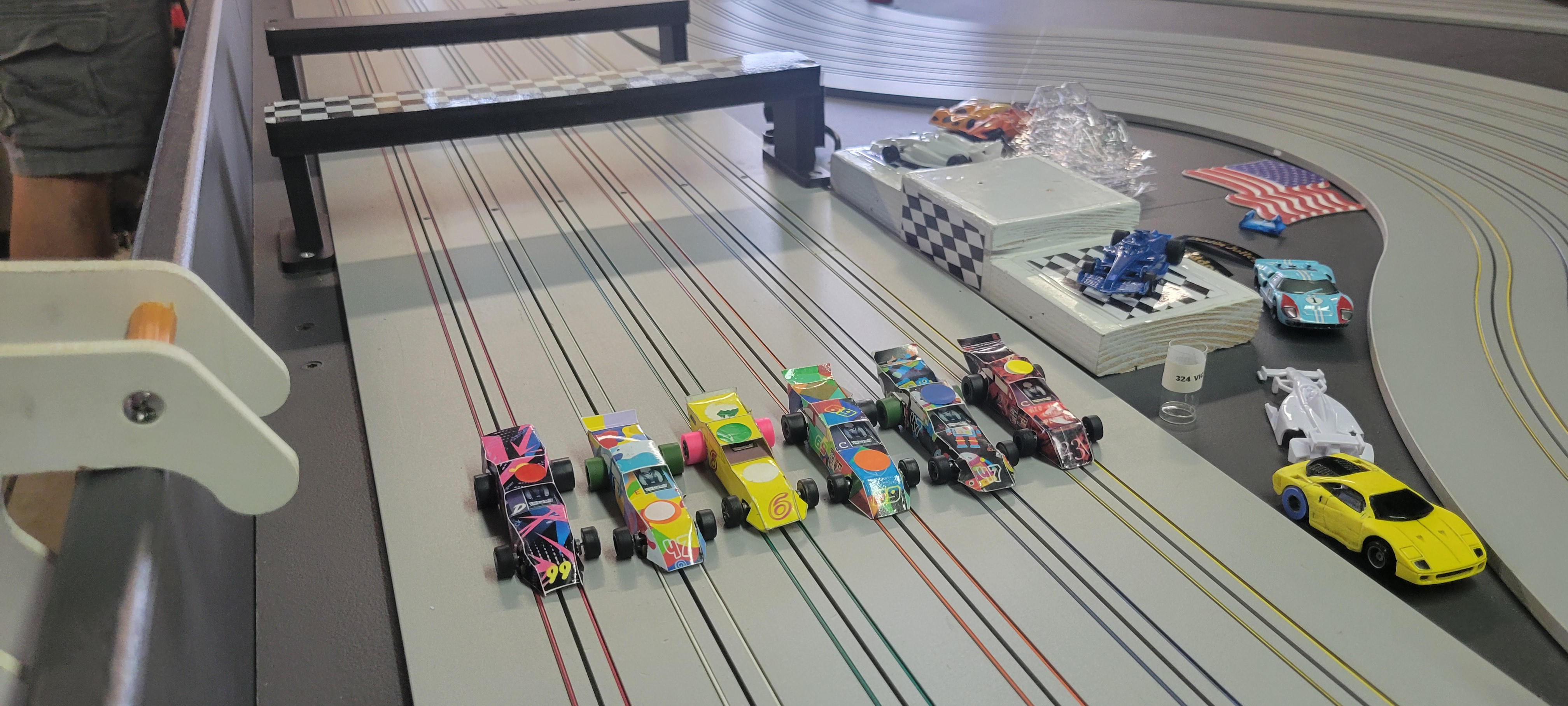
The first thing to focus on is what type of body you want to run. Smart money says the photo-paper body will likely be the best choice for raw speed and handling. However, you can choose any snap-on plastic, resin, or 3D-printed hardbody to get started in this class. Right now, the rules call for a Whelen-style body similar to the above paper bodies. F1/Indy bodies are not allowed.

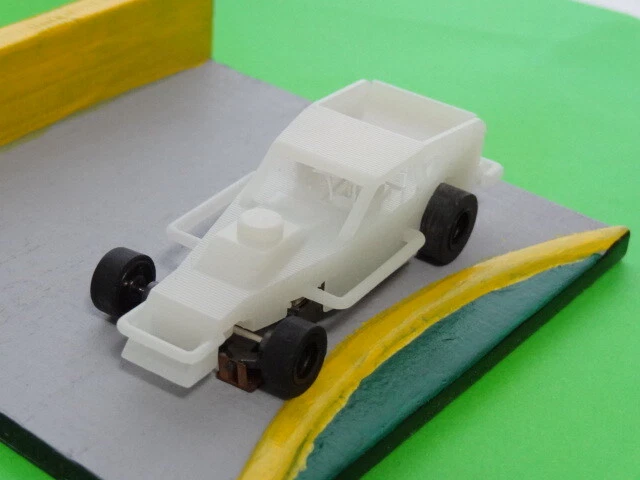
Here is a 3D-printed body we’ve used at Stewart Raceway on IROC sets.

https://www.ebay.com/itm/285415821110?_skw=sk&itmmeta=01KVHNDBQYGH1F0V4CRPWCJC59&hash=item42741bcf36:g:-5UAAOSwIwlgEEQI

Right now, the only sources for photo-paper bodies are through Stewart Raceway or Webster Motorsports (Kevin). Kevin’s body is probably a bit heavier than the Stewart Raceway design, but might be a bit more durable.

Right-click and open in a new tab for a larger image.

Stewart Raceway will provide a pre-designed body upon request for any regular participant at Stewart Raceway. If you’d like custom graphics, please email them to me, and I’ll see what I can do. I’m also thinking about creating a Lexan Whelen-style body. We’ll see where that goes.

The next important upgrade is an aftermarket rear axle assembly. You can do multiple options here. I suggest just purchasing one or two complete Viper rear ends. I think you can purchase without tires also.

This mod gives you a significant performance boost and lets you run any Viper Narrow PST Slip-On tire set.

Both 25-tooth and 23-tooth gearing are allowed. No metal gears! The lower tooth count provides higher speeds on larger tracks.

https://viperscaleracing.com/product/mega-g-g-pro-rear-end-setup/

The next upgrade would be an independent front-end assembly. This component provides for smoother corner entry and exits, which means better handling and faster lap times.

Brass, Delrin, or Alloy hubs are allowed.


The jury is out on which setup will work best and which courses, but my thinking is that the heavier (brass) material will allow a heavier pickup shoe spring tension. In theory, this will provide a bit more speed and keep the front end planted better.

This setup also allows a wide range of tire circumferences, giving you more tuning options to dial in your car for any track or course layout.

https://viperscaleracing.com/product/mega-g-brass-390-independent-front-end-setup/


Up next would be a motor upgrade. There are several options available here.

This is a motor and electronics board available from either Jag Hobbies or Viper. Viper also makes their own replacement motor assembly, which should be available on their site soon.

There are various motor options out there. The original MG+ motor had a green endbell. Newer cars have a red or orange endbell. The Jag and Viper assemblies appear to have black endbells as shown here.  Some are faster than others, but any of these motors can outperform another at times.

https://viperscaleracing.com/product/jag-replacement-motor-assembly-mega-g/

https://jaghobbies.com/ho_slot_cars/parts_tomy.htm

In any case, aftermarket motor assemblies with stripped electrical boards are, at a minimum, lighter in weight. If you’re running a brass independent front, this can help the car come off the start line and through the corners a little faster.

I don’t want to get into the weeds with the details here. The above parts and components will get your MegaG+ 1.7 chassis in the ballpark and competitive at Stewart Raceway.

Of course, there are many other ways to improve this platform’s performance. From front and rear axle shimming to replacing or otherwise changing pickup shoe spring tensions, this class provides builders with a very flexible, highly tunable racing platform.

If you have any questions or suggestions, please comment below or email any Master division driver. We’re hoping to start racing these new cars as soon as we have enough drivers with race-ready cars.

Parts List:

Front Axle Spacer .010″ (10 pcs) $2.95
NEW COLORS V2 Aluminum Independent Front End Setup – Black $8.95
V2 Independent CNC Retainers 3 pr. (Delrin) $4.50
Independent Front Tires – .326 $2.50
Independent Front Tires – .336 $2.50
MG+ Lexan Body Clip (Fits Viper Pin out) $3.99
JAG Replacement Motor Assembly Mega G+ $9.95
Brass Pinion Stopper .025″ (10 pcs) $3.95
Polypro Mega G 23T Crown Gear $3.95
Mega G+ Pro Rear end setup .250 NDFR $13.95

Platform Rules Update

We’ve really only been running three different builder classes in the last couple of seasons.

I’ve tried to simplify the rules for each of the major “builder” classes we run, and I’ve removed other car class rules that may have been confusing or conflicting.

For the time being, the following classes can be considered “active” racing classes, and their rules have been revised:

I’m not going to go over the specific changes here. The main purpose of the changes is to make sure everyone is clear on the platform rules and that we keep things competitive, but as low-cost and simple as possible.

Please review each class carefully and configure your stable of cars accordingly. I don’t think anyone recently racing at Stewart Raceway violates any of these revised rules, but please carefully review them at your earliest convenience to be sure.

Of course, we can add any new class to “active” status. I propose adding at least one of the Jag Hobbies platforms to the mix. The NC-2, RS-6, or the PR-5 come to mind.

Please feel free to comment, make suggestions, or ask questions.

MegaG+ Traction Magnet Measurements and Maximum Downforce Limits for Lites and Modified Classes

I took some measurements of a set of MG+ 1.7 IROC cars with Modified paper bodies, but other than that, stock out of the box cars with rear tire upgrades, including various sizes of Super Tires and a couple with Viper low-pro MG+ tires.

The average change in downforce when flipping a traction magnet is roughly .7 grams of downforce, which is reasonably significant. The measurements of the orange car are a bit suspect, but the others are fairly consistent. The Yellow lane car measurements were a bit of a surprise, but we’ve seen up to 6.3 in tech recently, which would definitely indicate a high-downforce orientation of N30 magnets in a Modified chassis.

MegaG+ 1.7 “Modified” IROC Set (stock rear axles, super tires, low-pro VSR tires)
Yellow Blue Orange Green White Red
VRP Meter (grams) 5.8 5.2 5.8 5.1 4.7 4.5
Flipped 6.6 6.1 5.7 5.9 5.4 5.4
Change 0.8 0.9 -0.1 0.8 0.7 0.9
Average Change (grams) 0.7
Gauss Readings Gs Range VRP Meter before/after flip (grams) Change
N30 (Stock) 2700 – 2800 5.5 6.8 1.3
N42 3200 – 3290 7.5 8.8 1.3
N52 3400 – 3600 9.7 10.8 1.1

The above N30 measurements were from one of my Modified platforms with N30 mags and a VSR replacement rear axle assembly with double-flange (.250) hubs and VSR PST Silicone soft Rear Tires (.432).  Some run the Lo-Pro VSR tires in both the Lites and Modified classes, which are slightly taller (.445). Aftermarket parts are only allowed on the Modified version of this car, so we shouldn’t see “Lite” cars with downforce much greater than 6 grams on the VRP meter and “Modified” cars with downforce not much greater than 7 grams on the VRP meter.

Of course, different VRP magnet meters can vary by up to +/- 5%. So, the maximum downforce for each class is as follows:

      • MegaG+ 1.7 Lites: 6.30 grams
      • MegaG+ 1.7 Modified: 7.35 grams

If a car’s downforce measurements exceed the above before racing, resolve the excessive downforce by using larger tires/hubs, or flipping a traction magnet. If a car has downforce greater than the above after a race, the car is disqualified from any races completed.

Note: If you're looking to get more downforce out a chassis, reduce the size of the rear tires (lower rear of chassis) to get more downforce. Lowering the chassis too much will result in slower top speed and usually slower lap times. It's a trade-off between speed and handling, find what works best for your driving style.

We may encounter modified-rules cars exceeding this maximum downforce limit due to unforeseen tire and/or hub sizes, or other factors. We’ll address that if/when it arises.

Please feel free to comment or discuss this addition to our MG+ rules here on the site or at our next event. Keep in mind, any rule can be changed if a majority of drivers/teams support it.

MG+ “Lite” Rules
MG+ “Modified” Rules

MegaG+ “Modified” Class Review

This simple class has proven to be a great success. Its rules are simple, the paper body transforms the car’s handling, it has faster lap times, and it is generally an enjoyable car to drive.

I know the paper body is only available from Stewart Raceway, but I’m sure others could figure out how to make one. In fact, Webster Motosports makes a slightly different style of body, which seems to work pretty well, too.

Our current MG+ Modified class is not all that “modified,” which begs the question: should we allow more mods in this class?

There are quite a few additional modifications that could be made:

      • Independent Front Ends from Viper
      • Aftermarket Rear Axle Assembly from Viper
      • Aftermarket Front and Rear Tires from Viper
      • 22T Crown Gears and Gear Bosses from Viper
      • Aftermarket Replacement FF-N20 Motor and/or Shoe Hanger Assembly from Jag Hobbies
      • Neodymium 45 or 52 Traction Magnets from Harden Creek

I’m sure there are other hop-up parts out there, but the point is that this car could be much more “modified” than we’re currently running it.

I recently tested the replacement motor assembly from Jag Hobbies and found it pretty slick, easy to install, and a nice upgrade to the stock motor. The chassis I used to test it was doing laps in the 5.8 range with its factory motor. After replacing it with the new Jag motor and hanger assembly, lap times dropped into the 5.4 range. It’s not a tremendous upgrade, but knowing there are alternatives is nice. There are also “hotter” motors out there that could be allowed.

To be clear, I am not pushing changes to our current rules for this car. I think a heavier and independent front end would be a simple but effective performance upgrade. Another modification we could allow is the high-downforce configuration using the stock N30 traction magnets. This rapid mod involves flipping one traction magnet to go from low to high downforce, which results in an additional 2 to 4 grams of downforce.

Again, I’m not advocating changes; I’m happy with the current rules. However, if enough teams/drivers want to change the rules, it isn’t out of the question.

Feel free to chime in via a comment below.